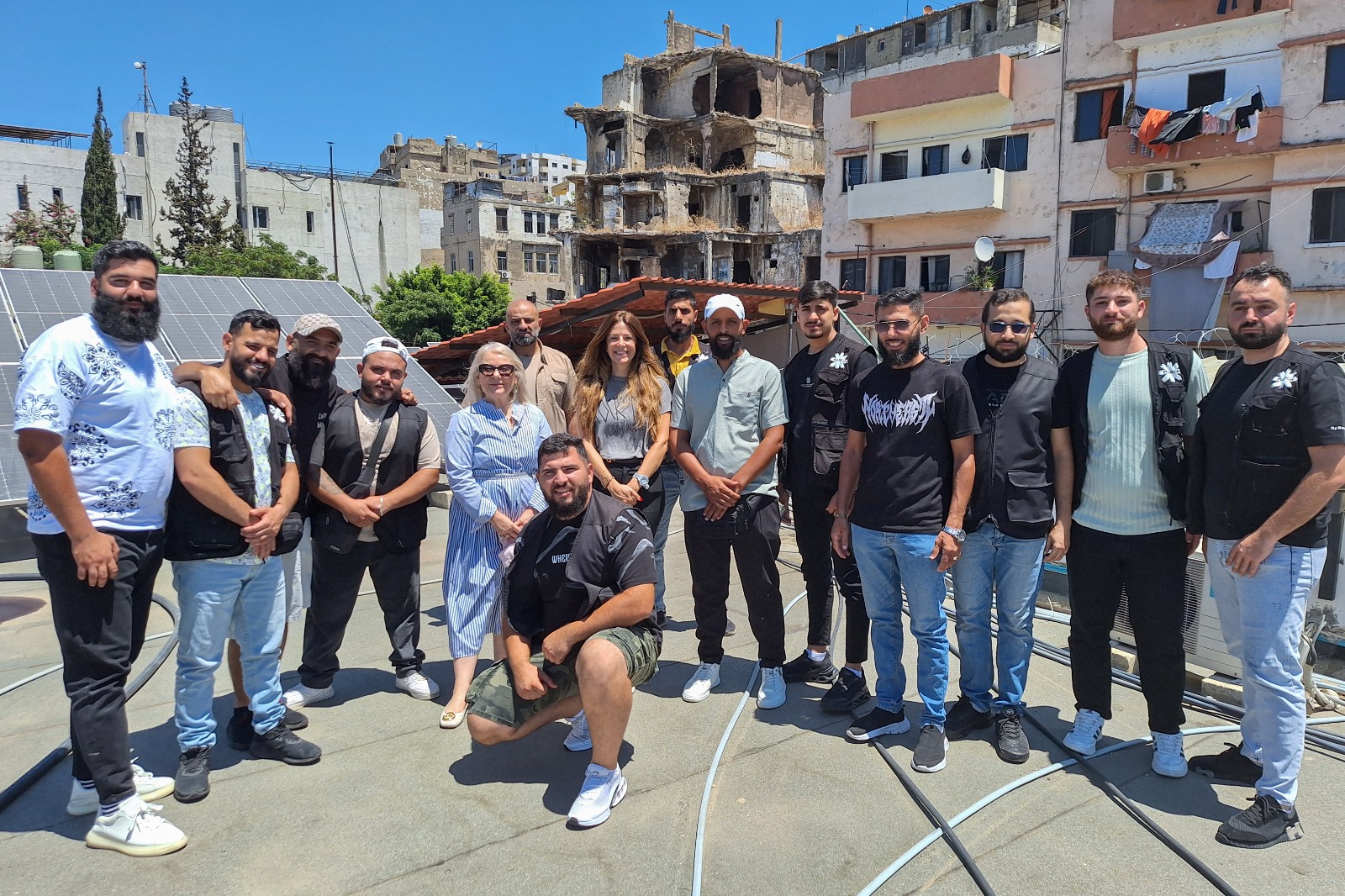
They once fought on opposite sides of Syria Street. Today they walk the same street together — as guides, as peacebuilders, and as the people international diplomats fly to Tripoli specifically to meet.
The Visits
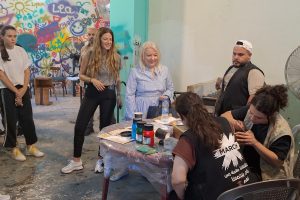
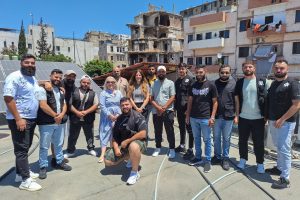
Between May and July 2026, Kahwetna — MARCH’s reconciliation center on Syria Street — welcomed four high-level diplomatic and international delegations, each guided personally by former fighters who have become the Love and War Tour’s official tour guides:
• May 19, 2026 — Yasmin Raya, Deputy Head of Mission, German Embassy in Lebanon
• June 10, 2026 — H.E. Arnout Pauwels, Ambassador of Belgium to Lebanon
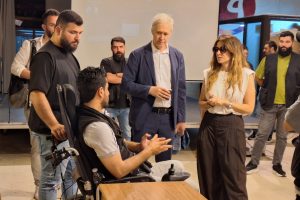
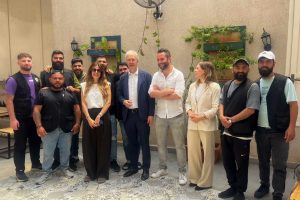
• July 27, 2026 — Jean Arnault, United Nations Special Coordinator for Lebanon a.i., accompanied by a six-member UN delegation
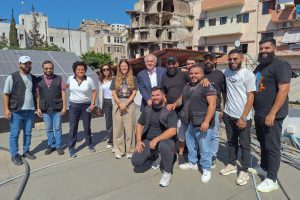
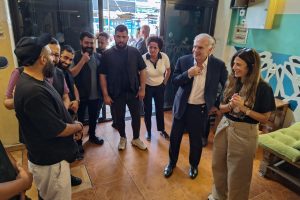
• July 28, 2026 — H.E. Despina A. Koukoulopoulou, Ambassador of Greece to Lebanon
What Is the Love and War Tour?
The Love and War Tour takes visitors along Tripoli’s former demarcation lines — once marked by years of armed conflict between Jabal Mohsen and Beb El Tebbeneh, and now officially recognized on Lebanon’s tourist map by the Ministry of Tourism.
What makes the tour unique is who leads it. Former fighters from both communities now guide visitors through the same streets where they once fought, sharing first-hand accounts of conflict, personal transformation, and reconciliation.
The journey begins at Kahwetna, MARCH’s reconciliation and cultural hub on Syria Street — the former front line between the two neighborhoods — where visitors are introduced to the area’s history and to 10 years of peacebuilding work that has helped turn a conflict zone into a shared community space. Inside Kahwetna, visitors also tour the workshops where youth receive vocational training, conflict transformation tools, and practical skills for their future.
Where people were once afraid to enter Tripoli, it has become a hub for culture, peacebuilding, and an internationally recognized example of reconciliation.
What the Delegations Witnessed
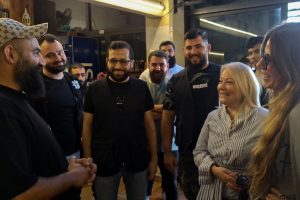
Each delegation was introduced to the tour by the former fighters themselves — men who once participated in armed clashes on these streets and who now serve as its guides and ambassadors.
The representatives sat directly with participants from Tripoli’s neighborhoods, who shared their personal transformation stories, voiced their communities’ challenges, and described how their involvement with MARCH has shaped their sense of agency and belonging.
These were not scripted presentations. They were honest conversations between senior international figures and young people from marginalized communities who rarely get a seat at that table.
Why This Matters for Peacebuilding in Lebanon
When senior diplomats and UN officials visit not to observe from a distance but to sit, ask questions, and listen — it sends a clear signal: locally driven peacebuilding in Lebanon matters on the international stage.
MARCH’s Love and War Tour is not a cultural curiosity. It is a 10-year model of what sustained, community-led reconciliation looks like in one of Lebanon’s most neglected cities. The men leading these tours are not symbols — they are evidence. Evidence that former instigators of conflict can become active contributors to peace when given genuine structure, trust, and purpose.
Youth empowerment and conflict transformation in Tripoli’s most marginalized neighborhoods — Jabal Mohsen, Beb El Tebbeneh — is not a side project. It is a direct response to decades of state neglect, limited opportunity, and cycles of violence that no top-down policy has been able to break alone.
Looking Ahead
These visits reflect a growing recognition among international partners that community-level reconciliation work in Lebanon — particularly in cities like Tripoli that have long been left behind — deserves sustained attention and support.
MARCH continues to develop Kahwetna and the Love and War Tour as models for locally led peacebuilding in fragile contexts. If your organization or embassy is interested in visiting, learning more, or supporting this work, we welcome the conversation.