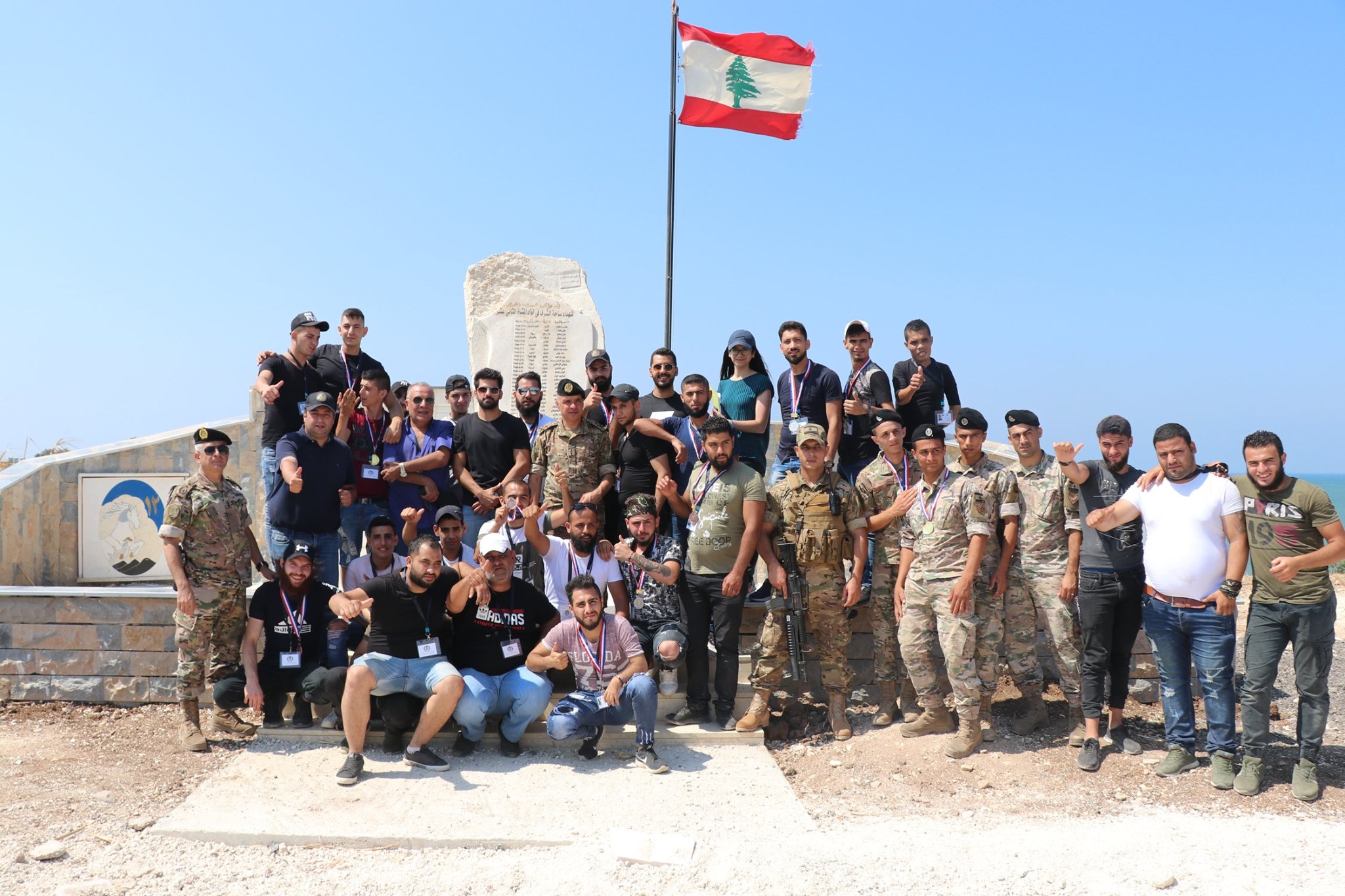
A History of Clashes, Battles, and Resentment The city of Tripoli, Lebanon, has faced its share of challenges, including periods of partial government absence and clashes between the communities of Jabal Mohsen and Bab El Tebbeneh, as well as between these communities and security institutions, notably the Lebanese Armed Forces. During the peak conflicts of 2011, the government’s presence diminished, only to reemerge in 2014 with a new security plan. However, this resurgence came with raids and arrests that left elevated feelings of resentment towards the Lebanese Armed Forces and the state. Consequently, tense relationships developed between the Lebanese Armed Forces and the community, leading to ongoing clashes. MARCHing Forward for Change MARCH recognized that fostering stability and unity required rebuilding trust, respect, understanding, and communication between local communities and the Lebanese army. This vision led to the creation of innovative initiatives aimed at bridging the gap and shifting perceptions away from hatred towards acceptance and tolerance. Sustainable and resilient stability isn’t achieved in isolation; it’s the outcome of collective efforts from diverse stakeholders working together. As such, MARCH strategically collaborated with the public sector, particularly the Lebanese Armed Forces, to reshape perceptions, rebuild trust, and foster unity within a community that has experienced conflict and division. Building Bridges Through Sports One of MARCH’s innovative approaches is football tournaments that bring together youth from historically opposing neighborhoods, Bab El Tebbeneh and Jabal Mohsen, along with members of the Lebanese Army. The participants form mixed teams, fostering teamwork and respect both on and off the field. By promoting trust and collaboration, these activities aim to positively influence individual and community opinions and change the narratives of war and hatred. This approach was previously successful with the biannual three-week-long football tournament. Building Bridges Through Dialogue In May 2019, MARCH organized a two-day army camp that facilitated open dialogues and physical activities between the Bab El Dahab team and the soldiers of Tripoli’s 12th infantry brigade. This retreat delved into past conflicts, encouraged team-building exercises, and provided shared experiences through team-building activities and shared meals. The event proved transformative, fostering mutual respect and a sense of partnership between the two groups. Moreover, an impressive example is the military training base established from the ground up. Young individuals from Bab El Tebbaneh and Jabal Mohsen, some of whom had participated in MARCH’s rehabilitative programs, teamed up with the Lebanese Army. This initiative involved constructing various elements of the facility, while dynamic ice-breaking activities focused on teamwork and interpersonal dynamics. Through daily cooperation and a shared goal, tensions dissipated, and a foundation for unity and inclusion was solidified. Building Bridges through Construction and Agriculture The civil-military cooperation activities were numerous and successful throughout the years. They brought the youth closer to military institutions and enabled them to learn various construction skills, from plastering to painting to electricity, along with the construction of solar panels in the army camps to produce sustainable energy for the camp. One of the initiatives also included an agricultural project in Araman Barracks in Tripoli. Youth who had once taken part in clashes in the area joined forces with the Lebanese Army to plant several lands in the camp and install greenhouses to benefit the army. In conclusion, MARCH’s journey exemplifies the transformative power of collaboration. By partnering with the public sector, particularly the Lebanese Armed Forces, the organization has succeeded in reshaping perceptions, forging communication, and building a stronger community. The initiatives, from sports tournaments to collaborative construction projects, highlight MARCH’s achievements in promoting unity, understanding, and resilience, all achievable through collaborative efforts that transcend divisions and promote progress.
Tag: Building
Reuters- Fighters and farmers step in to help Beirut after the blast
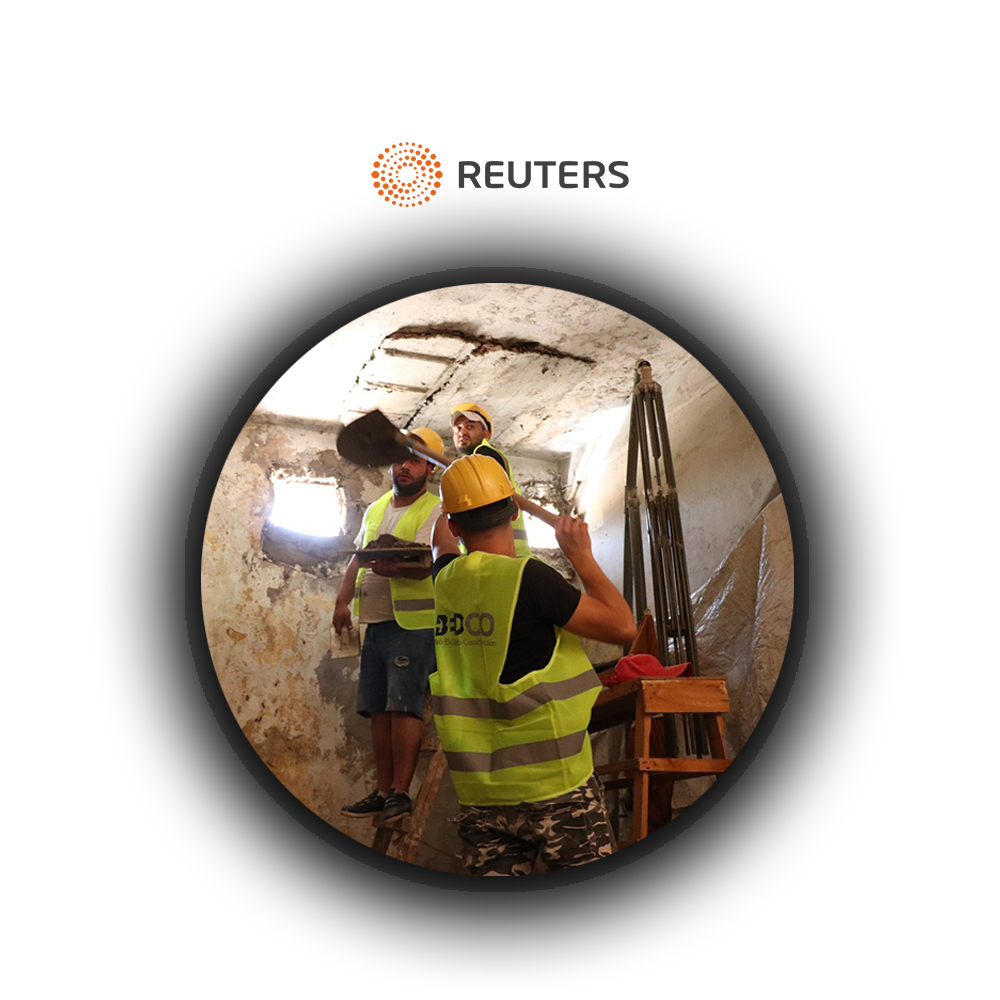
Ban Barkawi AMMAN (Thomson Reuters Foundation) – From former fighters repairing damaged buildings to rural women preparing meals, people from across Lebanon have stepped in to help businesses set up to do good after the seismic port explosion in Beirut. The Aug. 4 blast, which officials have blamed on more than 2,000 tonnes of ammonium nitrate being stored unsafely for years, killed at least 178 people, injured some 6,000, and damaged buildings across a swathe of the city. A list of social enterprises, or businesses set up with a mission to do good, already had teams working in construction and food preparation so quickly adapted and stepped in to help the nearly quarter of a million people uprooted. This included about 40 former fighters from feuding towns in the northern city of Tripoli who learned building skills in a rehabilitation programme run by non-profit peacebuilding organisation March and construction firm Beb El-Dahab (BEDCO). “It was so touching and heartwarming when they called to say ‘we want to come down and help, we don’t care about getting paid’,” said Lea Baroudi, founder of March. “I’m talking about extremely, extremely poor … former fighters who were fighting a sectarian war.” Lebanon is still scarred by civil war three decades ago and reeling from a financial crisis rooted in corruption and economic mismanagement when the explosion ripped through Beirut. Now the nation of 6.8 million people, which includes almost 1 million Syrian refugees, is also battling a surge in coronavirus infections, with the total number of cases at more than 9,330 since February, with 105 fatalities. BUSINESSES DOING GOOD As Lebanon faced ever increasing social and environmental challenges in recent years, a rising number of social startups have emerged to tackle issues ranging from garbage disposal to clean drinking water. According to the Makesense Organisation, which helps entrepreneurs solve environmental and social problems, in 2017 there were more than 200 social enterprises in Lebanon. No more recent figures were available. Alfanar, a philanthropy organisation that supports Arab social ventures, launched a fundraising appeal for its network of social enterprises after the blast, adding March-BEDCO to the list so it could pay workers. Alfanar’s Lebanon country director Michelle Mouracade said the country’s economic crisis had already disrupted the work of social enterprises that have had to cut staff and salaries, and slashed their revenues by 60 to 75% since October. “It’s really difficult but at the same time, social entrepreneurs are by definition risk takers. They’re resilient and their mission is about finding opportunity when there are problems,” she told the Thomson Reuters Foundation. Mouracade said people from vulnerable communities had come to depend on social enterprises to feed their families due to the financial situation, the coronavirus and now the blast. The Souk el Tayeb market, Lebanon’s first farmers market where about 100 small-scale farmers and producers sell fresh produce, was temporarily closed after the explosion destroyed its offices, market and kitchens, said founder Kamal Mouzawak. “They live from the sales of their produce,” said Mouzawak who launched the social enterprise in 2004 to encourage sustainable agriculture. “It was one of the most difficult moments of my life because how can I feel like I’m stopping everything?” But with business at a standstill, Mouzawak was able to hire several cooks from Souk’s sister dining business, Tawlet, where women from various rural villages and underprivileged communities prepare meals, and launched an emergency kitchen. From their undamaged kitchens, they are providing more than 1,000 meals a day for volunteers on the frontline and victims. Mouzawak is hoping that a fundraising campaign for 500,000 pounds ($660,000) will rebuild ruined spaces and restore the financial lifeline for the teams at Souk el Tayeb and Tawlet that train and help migrant workers, rural women and refugees. Mouracade said social entrepreneurs know how to act quickly in a crisis, as was evident at the outbreak of the coronavirus when businesses started to make masks and tap overseas markets. “By providing people with love and support and understanding, you can see how things can change,” Baroudi said. “This is what we want Lebanon to be.”
Civil Military Cooperation for social cohesion
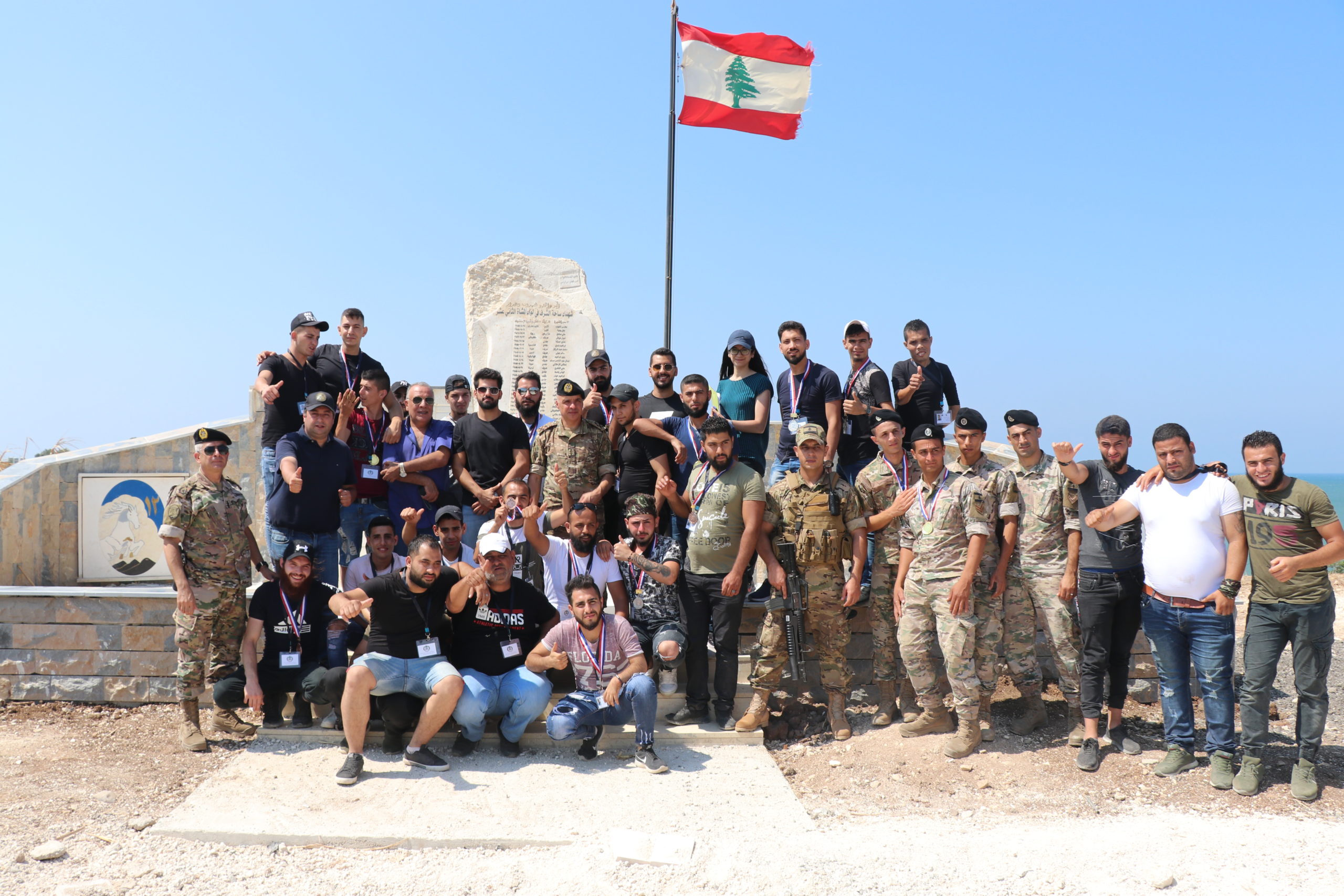
Hand in Hand for a better Lebanon As part of its numerous collaborations with the Lebanese Army to improve social cohesion and promote mutual respect and understanding between communities and the Army, MARCH launched a new partnership on June 29th: building a military training base for Tripoli’s 12th infantry brigade from the ground up. The organization brought together a group of twenty-seven young men from Beb El Tabbaneh and Jabal Mohsen. Over the duration of this project, the youth received on-the-ground capacity building training- constructing all the components of the base including a raid room, a shooting field, a heliport, a drills field, the flag square and a watchtower as well as all boarding necessities such as bedrooms and bathrooms as well a multidisciplinary room that will be dedicated to classes and indoor training sessions. Additionally, the team executed the landscape work and conceptualized and painted unique designs across the base. In parallel, young women from both communities utilized the graphic design skills they acquired through the Beb El Dahab program to conceptualized and produce all the maps, logos, and signage of the facility. This initiative entailed daily cooperation between the young men of Beb El Tabbaneh and Jabal Mohsen and the Lebanese army through their work, recreational activities, common classes and shared meals. Ice Breaking activities were also incorporated into the venture. The primary objective was to allow them to operate as a team, support each other and optimize their performance as a unit. Given the long-term nature of the initiative participants got an in-depth look at their interpersonal dynamics which undoubtedly helped alleviate any existing tensions and contributed in forging a solid foundation to move towards cohesion and inclusion. The base was recently inaugurated in the presence of British Ambassador, His Excellency Chris Rampling. The attendees were given a tour of the facility. The opening event also featured a military parade and a performance by the army’s band. The occasion was marked by a memorial. We look forward to many more future collaborations!
À BEYROUTH, DES JEUNES MARGINALISÉS APPRENNENT À VIVRE ENSEMBLE
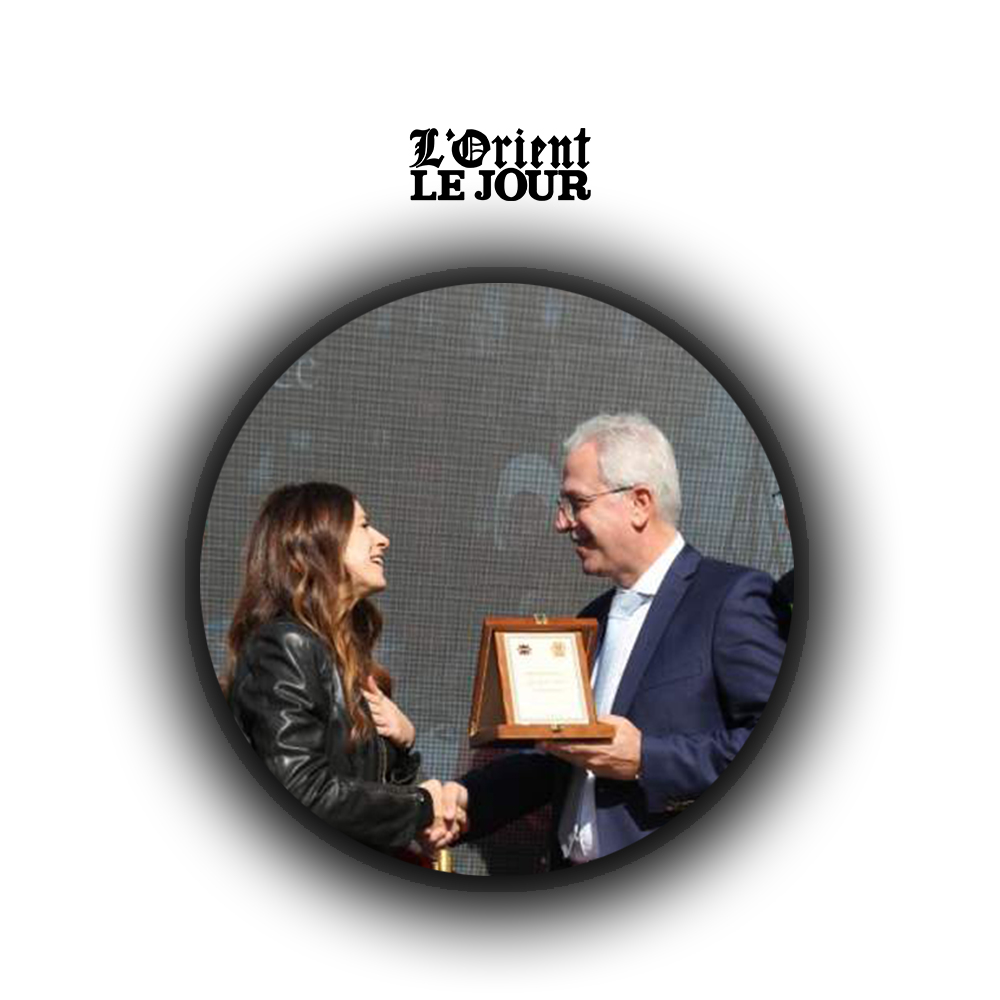
Nada MERHI | OLJ SOCIAL L’ONG March a inauguré hier le centre de la Défense civile, dans le secteur Cola, au terme de près six semaines de travaux dans le cadre de ses projets de capacitation de la jeunesse marginalisée. Au siège régional de la Défense civile dans le secteur Cola, à Beyrouth, l’ambiance était hier à la fête. Les volontaires en uniforme s’activent à aligner les chaises, arranger le son, monter la tribune… Au terme de près de six semaines de travail assidu, l’heure était à l’inauguration de cet espace rénové grâce à une initiative de March, une ONG qui œuvre depuis sa fondation à la capacitation des jeunes des régions « oubliées » et « marginalisées », en les impliquant dans des projets sociaux. Forte de son expérience réussie à Tripoli où elle est parvenue à réunir, autour de plusieurs projets, au nombre desquels un spectacle, un café culturel et plusieurs chantiers de reconstruction, les anciens combattants des quartiers rivaux de Jabal Mohsen et Bab el-Tebbané, l’ONG a décidé de dupliquer cette expérience à Beyrouth à travers un projet sociétal. « Il était naturel pour nous de penser en premier à la Défense civile, parce que cette institution représente le Liban dont nous rêvons : un groupe de volontaires qui n’hésitent pas à servir leur pays, affirme Léa Baroudi, présidente de March. Malheureusement, ils ne sont toujours pas estimés à leur juste valeur et ne reçoivent pas le soutien nécessaire. » Aussi, pour mener à bout ce projet, l’ONG, qui bénéficie du soutien de l’ambassade de Grande-Bretagne, a recruté vingt jeunes de régions marginalisées de Beyrouth, « qu’on évite » et qui « font l’objet de préjugés » : Ghobeyri, le secteur de la Cité sportive, le quartier dit de « tôle », Chiyah, Tarik Jdidé… Elle a appris à ces jeunes laissés-pour-compte des métiers de construction, tout en leur assurant « tout le soutien nécessaire pour se réconcilier avec eux-mêmes, se rapprocher les uns des autres, et aussi pour devenir indépendants », explique Léa Baroudi. Elle précise que les projets menés par March visent à « briser ces barrières géographiques, communautaires et régionales que nous érigeons ». Une communauté soudée Mamdouh, Samir et Mohammad habitent dans le secteur de la Cité sportive. « Les gens issus de ce quartier sont considérés comme des voyous », avance Mamdouh. « Jusqu’à il y a quelques semaines, je n’avais aucune occupation, renchérit Mohammad. Je suis sans papiers et ne peut donc rechercher du travail. Je passais mes journées entre la maison et la rue. Je n’avais rien d’autre à faire. » Idem pour Waël, 19 ans, habitant Chiyah, qui confie qu’avant d’intégrer le projet, « je végétais à la maison ». « Je passais mon temps à dormir, manger et boire du café », dit-il. Pour ces jeunes, le projet initié par March a été une aubaine. « Mon ami m’en a parlé, raconte Mohammad. L’idée m’a plu. Je sentais que je pourrais opérer un changement dans ma vie. Je n’ai pas eu tort. Je suis analphabète. Dans le cadre de ce projet, j’ai appris à lire. J’ai appris aussi un peu d’anglais et de maths. Maintenant je sais faire des calculs et des factures. Côté professionnel, j’ai appris beaucoup sur les métiers de construction. J’ai appris à les faire avec précision. » Pour Samir, « ce projet revêt une double importance, parce que non seulement j’ai appris un métier, mais j’ai aussi rencontré des jeunes de communautés et de régions différentes ». « Au fil des semaines, nous sommes devenus un groupe soudé, poursuit-il. Nous avons appris à vivre ensemble. Nos querelles ne durent pas longtemps. » Comment pensent-ils continuer après cette expérience ? « Je n’aimerais pas continuer à vivre comme je le faisais avant », assure Mohammad. Mais vu la situation par laquelle passe le pays, il n’espère pas pouvoir trouver du travail rapidement. Léa Baroudi souligne que March n’abandonne pas les jeunes une fois le projet terminé. « À Tripoli, nous avons réussi à placer plus de quarante bénéficiaires de nos programmes dans une entreprise privée, se félicite-t-elle. D’autres ont appris un métier qu’ils exercent. Il est sûr que nous n’allons pas lâcher ces jeunes. Nous poursuivrons avec une petite pièce que Georges Khabbaz, comédien et metteur en scène, a écrite pour eux. Puis nous allons les impliquer dans la rénovation du centre de Bachoura de la Défense civile. Nous trouverons toujours de petites opportunités qui leur permettent de devenir indépendants. » Volontariat, altruisme et dévouement La cérémonie d’hier s’est déroulée en présence notamment du directeur général de la Défense civile, le général Raymond Khattar, représentant la ministre sortante de l’Intérieur. Dans une allocution, il a expliqué que les travaux comprenaient la rénovation du bâtiment existant, la construction de nouvelles salles et l’équipement du centre avec du matériel de secours. Il s’est penché sur les problèmes que rencontre la Défense civile dont les volontaires tardent à être titularisés, « espérant qu’ils le seront au début de l’année prochaine ». L’ambassadeur de Grande-Bretagne, Chris Rampling, a de son côté mis l’accent sur la mission de la Défense civile qui « incarne le vrai esprit du volontariat, de l’altruisme et du dévouement ». « Nous vous avons vu risquer vos vies pour sauver les autres », a-t-il poursuivi, soulignant qu’aujourd’hui, « les jeunes vous le rendent ». Et d’insister : « Le Liban passe par une importante phase de son histoire. Nous avons vu les Libanais à travers le pays exprimer leurs revendications légitimes pour la réforme, la transparence et une meilleure gouvernance. Les Libanais ont montré qu’ils rejettent la division. Ils veulent un Liban uni dans la paix, la prospérité et la coexistence. Aujourd’hui a été l’occasion de réitérer notre soutien aux volontaires de la Défense civile qui donnent leur temps pour sauver la collectivité. » Georges Khabbaz, qui soutient inconditionnellement March, a affirmé que les ONG, avec à leur tête March, ont du mérite parce qu’elles ont contribué à l’éveil que le Liban connaît depuis
EVOLUTION OF BEB EL DAHAB’S FOURTH PHASE!
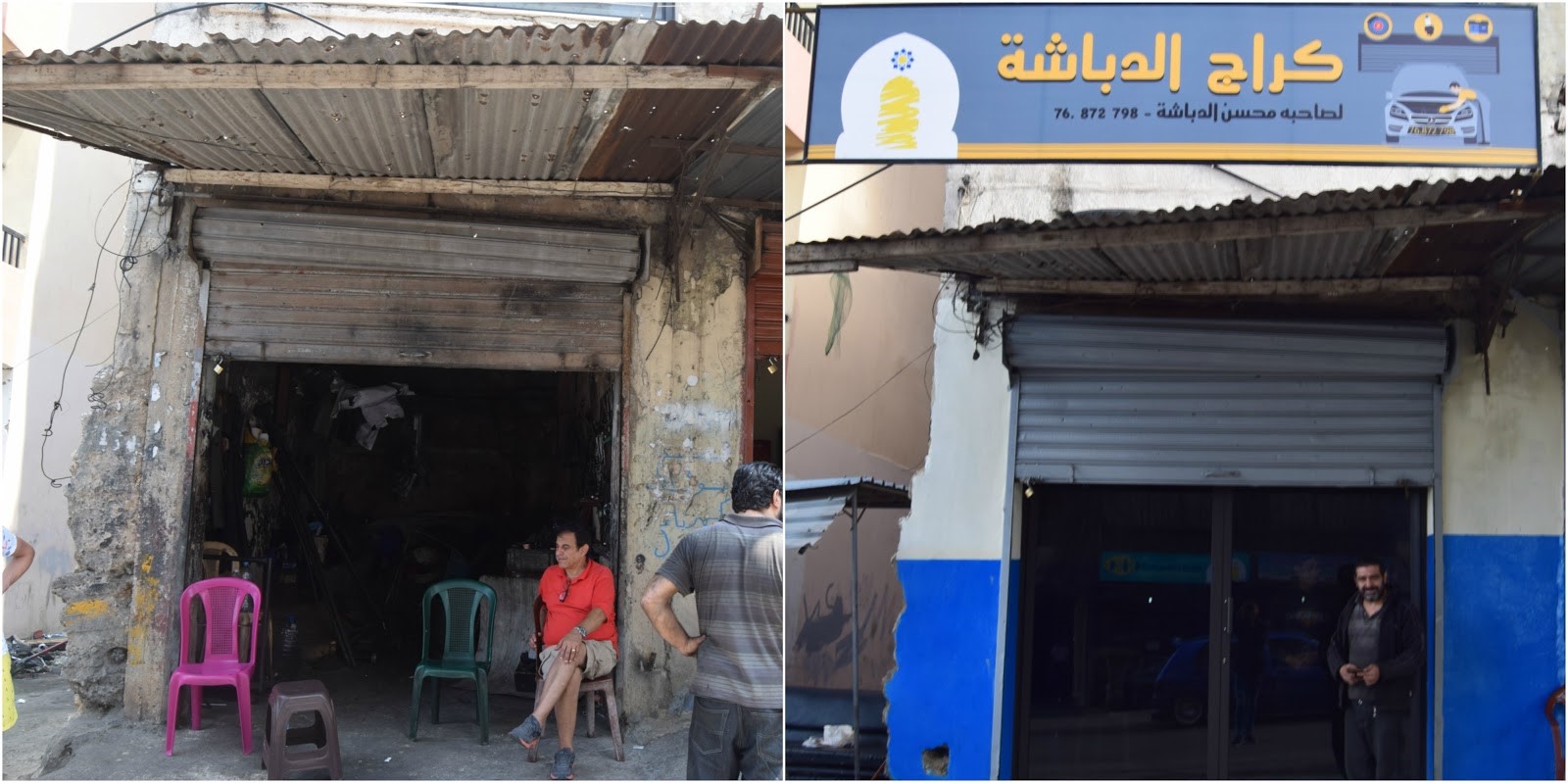
MARCH’S 4th round of the “Beb el Dahab” initiative, where the youth movement takes part in development efforts to rebuild their neighborhoods, in order to ensure the sustainability of the peace-building process is just about to end. MARCH launched the initiative that aimed at rehabilitating almost all shops and storefronts in these two areas after years of war, with the help of more than 120 young men and women from both areas and its surroundings, working together to rebuild what was destroyed during the clashes.MARCH’s idea is not only to bring the youth from both sides together and to create a place of peace, but also to teach them useful skills so that they can contribute to a growing society. The initiative hopes to give this group of young, motivated youth a chance to forge themselves a better future, to strengthen social bonds and give people a sense of true belonging. MARCH is truly happy about the big amount of participants who make all of this possible!