Transformative Collaborations: Building Bridges between Local Communities and Governmental Institutions

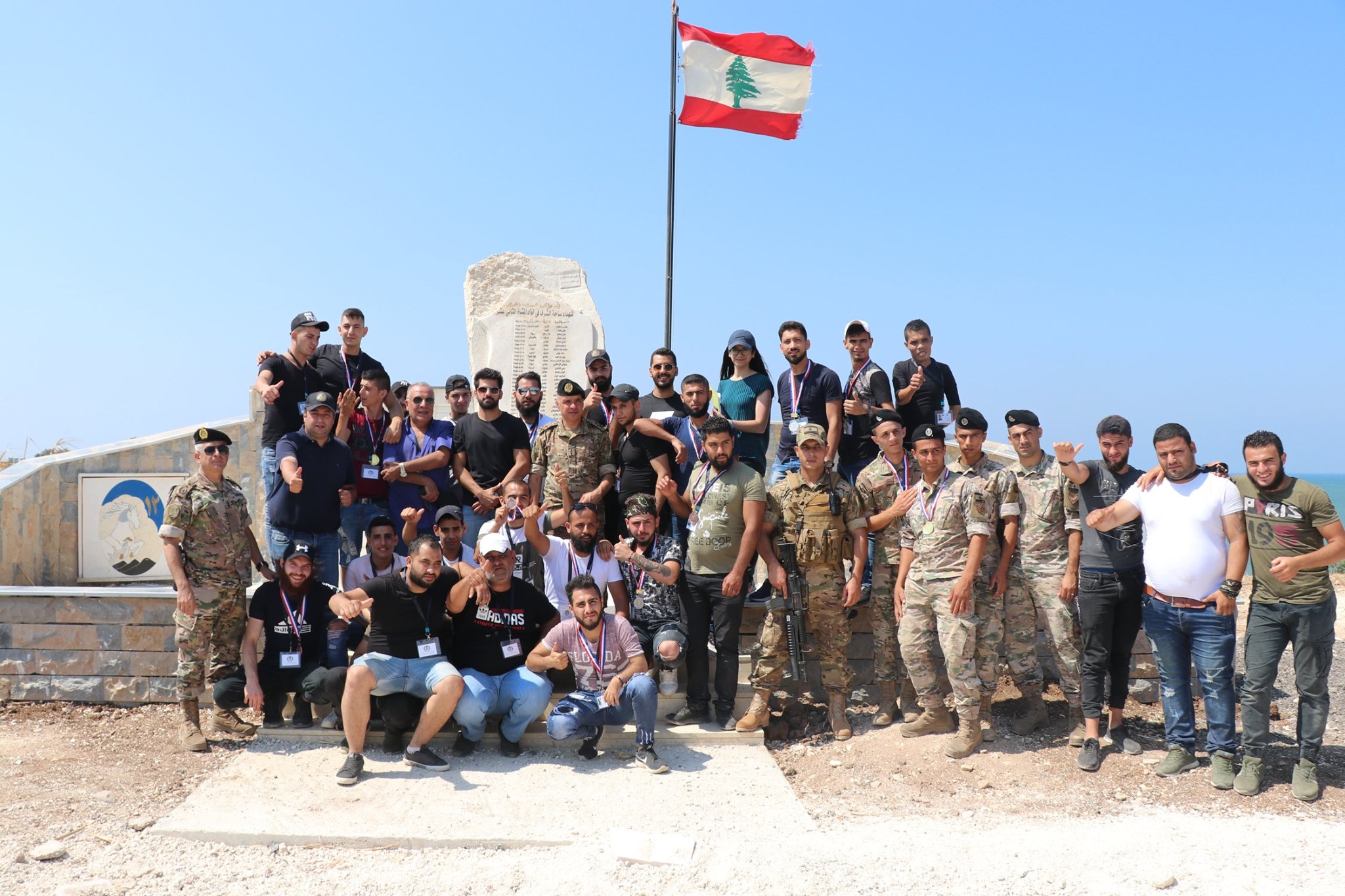
A History of Clashes, Battles, and Resentment The city of Tripoli, Lebanon, has faced its share of challenges, including periods of partial government absence and clashes between the communities of Jabal Mohsen and Bab El Tebbeneh, as well as between these communities and security institutions, notably the Lebanese Armed Forces. During the peak conflicts of 2011, the government’s presence diminished, only to reemerge in 2014 with a new security plan. However, this resurgence came with raids and arrests that left elevated feelings of resentment towards the Lebanese Armed Forces and the state. Consequently, tense relationships developed between the Lebanese Armed Forces and the community, leading to ongoing clashes. MARCHing Forward for Change MARCH recognized that fostering stability and unity required rebuilding trust, respect, understanding, and communication between local communities and the Lebanese army. This vision led to the creation of innovative initiatives aimed at bridging the gap and shifting perceptions away from hatred towards acceptance and tolerance. Sustainable and resilient stability isn’t achieved in isolation; it’s the outcome of collective efforts from diverse stakeholders working together. As such, MARCH strategically collaborated with the public sector, particularly the Lebanese Armed Forces, to reshape perceptions, rebuild trust, and foster unity within a community that has experienced conflict and division. Building Bridges Through Sports One of MARCH’s innovative approaches is football tournaments that bring together youth from historically opposing neighborhoods, Bab El Tebbeneh and Jabal Mohsen, along with members of the Lebanese Army. The participants form mixed teams, fostering teamwork and respect both on and off the field. By promoting trust and collaboration, these activities aim to positively influence individual and community opinions and change the narratives of war and hatred. This approach was previously successful with the biannual three-week-long football tournament. Building Bridges Through Dialogue In May 2019, MARCH organized a two-day army camp that facilitated open dialogues and physical activities between the Bab El Dahab team and the soldiers of Tripoli’s 12th infantry brigade. This retreat delved into past conflicts, encouraged team-building exercises, and provided shared experiences through team-building activities and shared meals. The event proved transformative, fostering mutual respect and a sense of partnership between the two groups. Moreover, an impressive example is the military training base established from the ground up. Young individuals from Bab El Tebbaneh and Jabal Mohsen, some of whom had participated in MARCH’s rehabilitative programs, teamed up with the Lebanese Army. This initiative involved constructing various elements of the facility, while dynamic ice-breaking activities focused on teamwork and interpersonal dynamics. Through daily cooperation and a shared goal, tensions dissipated, and a foundation for unity and inclusion was solidified. Building Bridges through Construction and Agriculture The civil-military cooperation activities were numerous and successful throughout the years. They brought the youth closer to military institutions and enabled them to learn various construction skills, from plastering to painting to electricity, along with the construction of solar panels in the army camps to produce sustainable energy for the camp. One of the initiatives also included an agricultural project in Araman Barracks in Tripoli. Youth who had once taken part in clashes in the area joined forces with the Lebanese Army to plant several lands in the camp and install greenhouses to benefit the army. In conclusion, MARCH’s journey exemplifies the transformative power of collaboration. By partnering with the public sector, particularly the Lebanese Armed Forces, the organization has succeeded in reshaping perceptions, forging communication, and building a stronger community. The initiatives, from sports tournaments to collaborative construction projects, highlight MARCH’s achievements in promoting unity, understanding, and resilience, all achievable through collaborative efforts that transcend divisions and promote progress.

EMPOWERING WOMEN

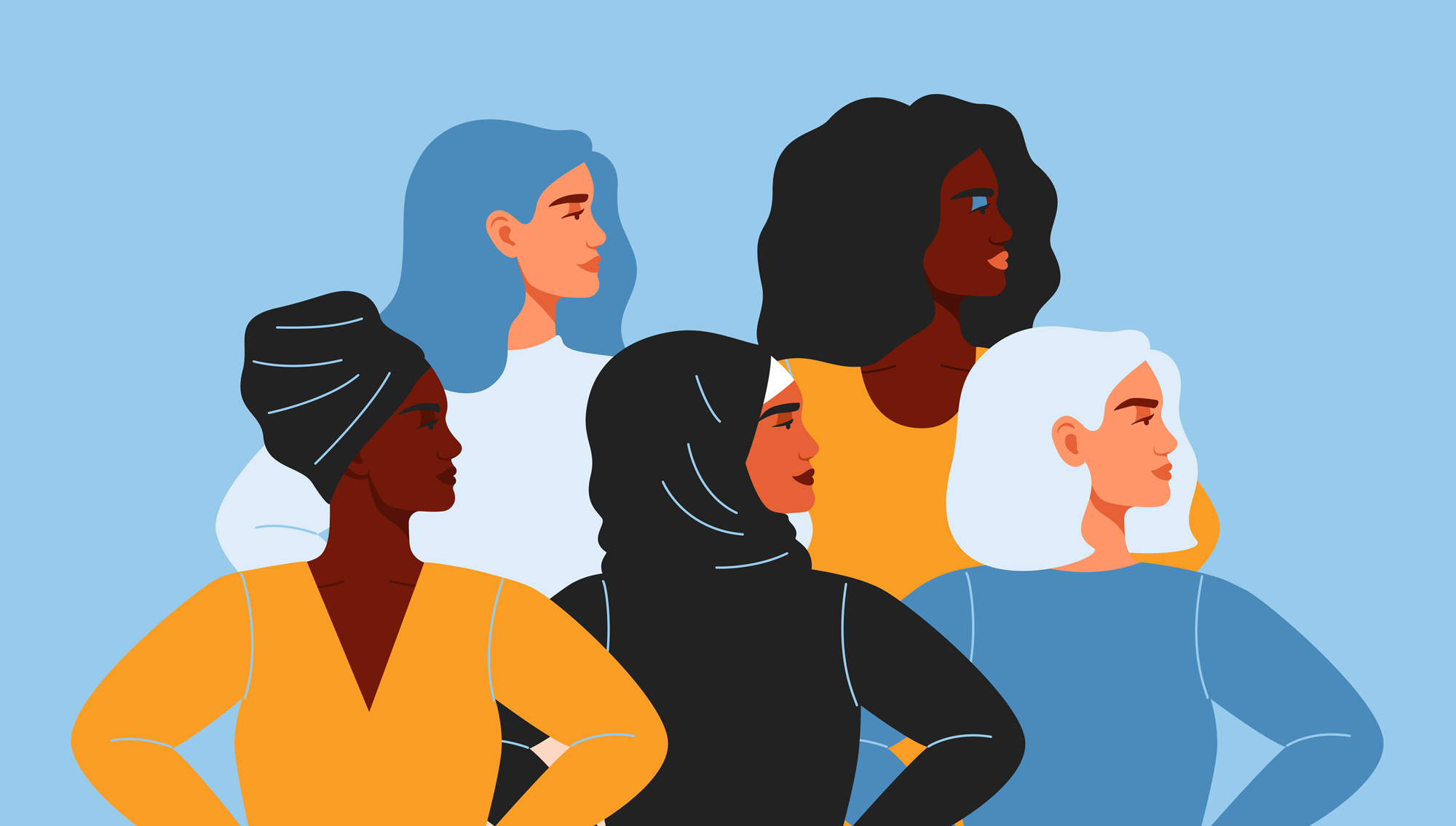
Transforming Communities: Empowering Women through Post-Conflict Peacebuilding In recent years, the humanitarian sector has embraced a gender-sensitive lens: recognizing the importance of women’s active participation in peacebuilding processes, particularly in post-conflict societies. MARCH’s work in Tripoli has been at the forefront of this transformative approach which showcases the power of women’s inclusion in rebuilding efforts and how it leads to stronger, more resilient communities. Recognizing the Crucial Role of Women MARCH acknowledges the importance of women’s equal and active involvement in their rehabilitation and reintegration programs which is vital in defying the concept of alienating women from peacebuilding interventions that in turn weakens the foundation and compromises the stability and sustainability of intercommunal cohesion.  The local context in Tripoli demanded a nuanced and intricate approach. MARCH launched a unique reconstruction project in Beb El Tabbaneh and Jabal Mohsen following the severe clashes of 2011. The project involved daily collaborations between men and women from both communities. Their joint efforts focused on renovating buildings and a market place along the former demarcation line that was destroyed by the clashes. This initiative aimed to foster tolerance, respect, and understanding while challenging traditional gender hierarchies. Breaking Stereotypes and Empowering Women During the workshops in Kanyamakan, women challenged the patriarchal perception of their role and became fundamental components of the rebuilding process. They worked alongside men, defying traditional gender norms. Men received on-the-job training in construction, while women were offered graphic design courses. The women designed shop signs and branding materials, demonstrating their creativity and contribution to the project. This collaboration shattered gender barriers and shifted power dynamics. Transforming Women into Actors of Change The inclusion of local women in MARCH’s work empowered them and provided the confidence and support they lacked. By equipping them with the necessary skills and tools, MARCH enabled women to become agents of change. They transformed from passive recipients of aid to active participants in their communities’ development. Through the Beb El Dahab program, women discovered new skills, interests, and hobbies. They even started manufacturing their own products, such as t-shirts and tote bags, generating their own revenue and becoming economic agents in the process. Evolution of Women’s Engagement MARCH’s efforts have had a lasting impact on the lives of women in Beb El Dahab. Their engagement with the organization’s activities continues to evolve and take on various forms. By empowering women, MARCH not only challenged gender inequality but also transformed societal perceptions of men towards fashion design and embroidery. Now, women participants have access to a world of opportunities previously restricted by their gender, leading to a more inclusive and prosperous society. MARCH’s work in the Kanyamakan hub of Beb El Dahab exemplifies the transformative power of women’s inclusion in peacebuilding processes. By empowering women and challenging traditional gender roles, MARCH has helped create resilient and cohesive communities. Their efforts demonstrate the importance of women’s equal and active involvement in rebuilding post-conflict societies, ultimately leading to sustainable peace and progress.  

THE TRANSFORMATIVE POWER OF ARTS AND CULTURE

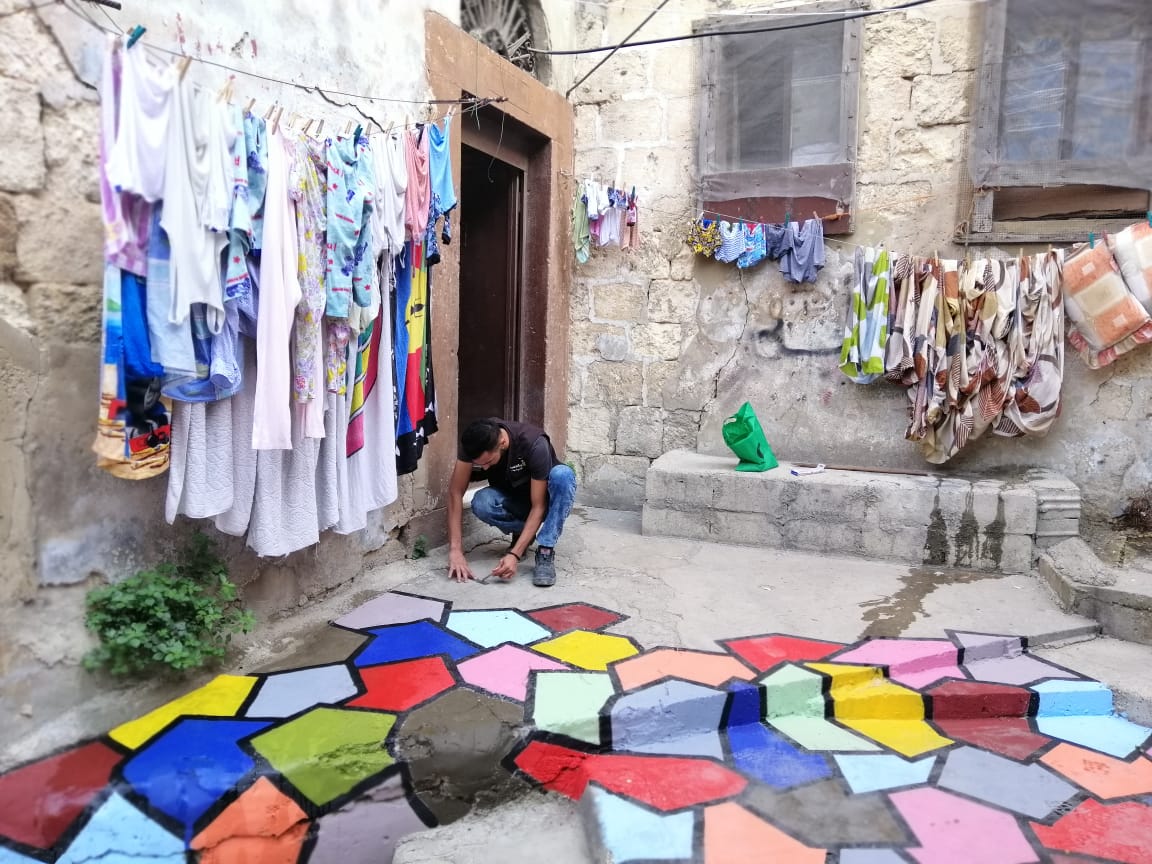
MARCH’s approach has always been rooted in its belief that arts and culture are powerful catalysts of change that can help foster long-term sustainable stability. In addition to theater, MARCH has also incorporated art in its holistic rehabilitation and reintegration program- Beb El Dahab. By creating a safe space for personal and professional development, the youth are able to explore new skills and interests. These former fighters are encouraged to express themselves through various constructive outlets, including the arts. This has offered them a platform for self-expression that enables them to channel their emotions in a positive manner. We also hosted Shrine, an international installation artist, painter and muralist that helped teach MARCH’s youth new techniques. This generated a ripple effect as we saw a numerous young men and women take part in this project. Today, a number of them have blossomed into wonderful artists that have contributed in adding a beautiful touch of color across the streets of Beb El Tabbaneh and Jabal Mohsen. This is quite symbolic as it represents a journey of change for both the communities and their youth.Finally, MARCH consistently strives to promote and showcase local talent through its various events such as the Cultural Blast for example. Through our work with marginalized youth from Tripoli, Akkar and Beirut, we have realized that these areas harbor a well of untapped potential waiting to be unleashed. Many artists have never been given the right opportunities. Therefore, MARCH actively tries to collaborate with these youths on different projects and events. Additionally, both our cultural cafés have professional recording studios accessible to the communities to enable promising musicians and producers to further their careers.

LANGUAGE SKILLS FOR BIGGER AND BETTER OPPORTUNITIES

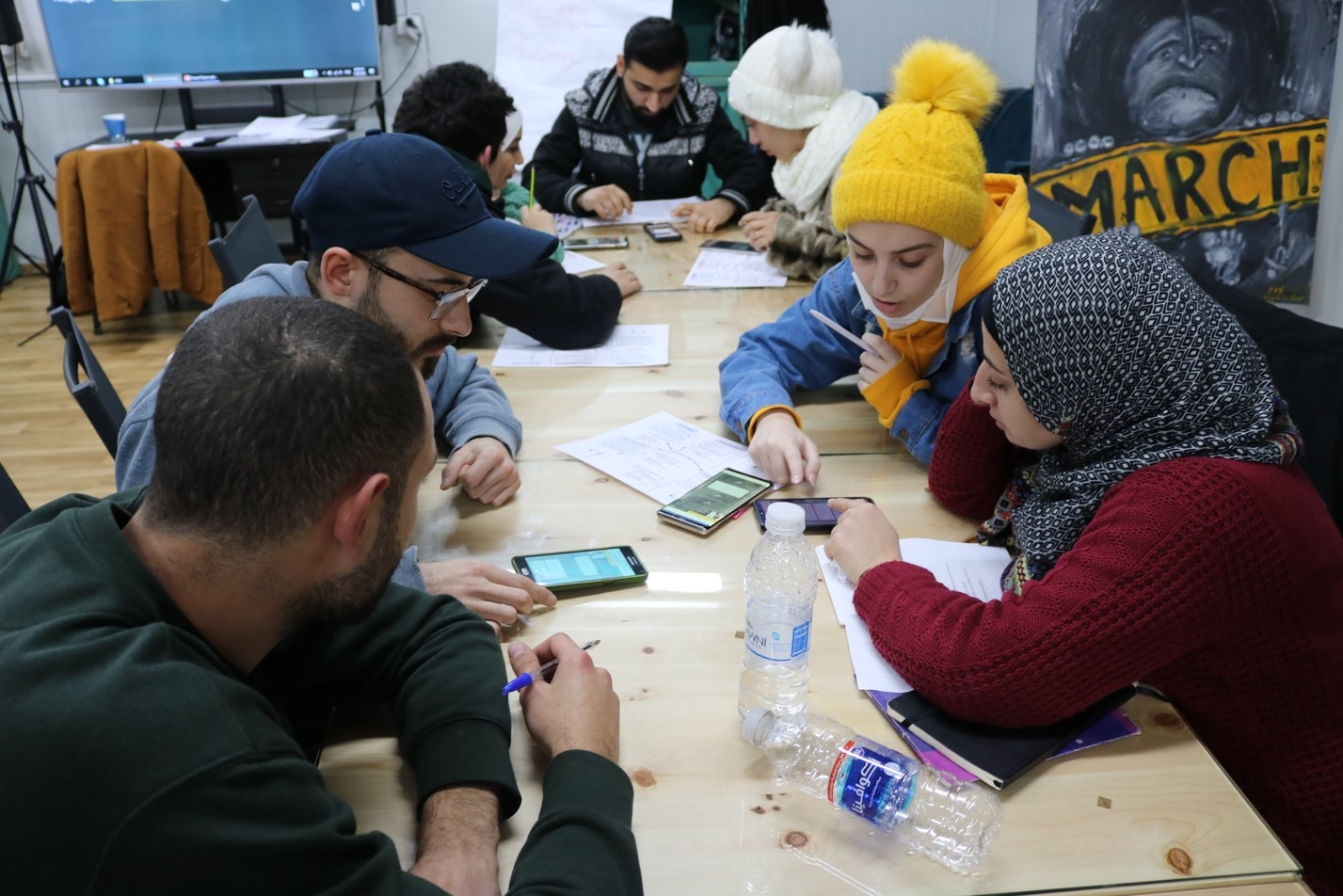
This past month Hona Beirut started a ten-week-long English workshop. Marginalized youth were selected from all over Beirut to improve their language skills, or even to learn English completely from scratch! After completing their intake, participants were divided into four separate levels ranging from complete beginners, elementary, intermediate all the way to advanced. Learning expectations included general improvement in the language, some requests for specific grammar topics were made, and mostly importantly the need to practice speaking. For Intermediate students the focus has mainly been on grammar and speaking correction due to their level. The advanced class covers a variation of topics that challenge B2 speakers of English, namely interviewing simulations, email writing, public speaking, negotiations, TEOFL training etc. Each lesson is designed for the specific needs of the level. Every session is interactive and uses a diverse range of learning and teaching techniques such as, mobile apps, online live exercises, simulation games to practice language and much more. Students from each level should walk away with a new-found confidence in usage of vocabulary, correction in grammar, and of course the safety of having practiced something new in a substantial amount of time. One-on-one sessions are also offered to students who feel they require extra assistance in lesson content, personal growth, CV writing, or any other requested language need. With five weeks left to go, the first cycle of English Lessons at Hona have been successful and hopefully will see the growth of each of its students that have been dedicated to self-improvement.

LEA BAROUDI FOR THE ARRIA FORMULA MEETING AT THE UN SECURITY COUNCIL

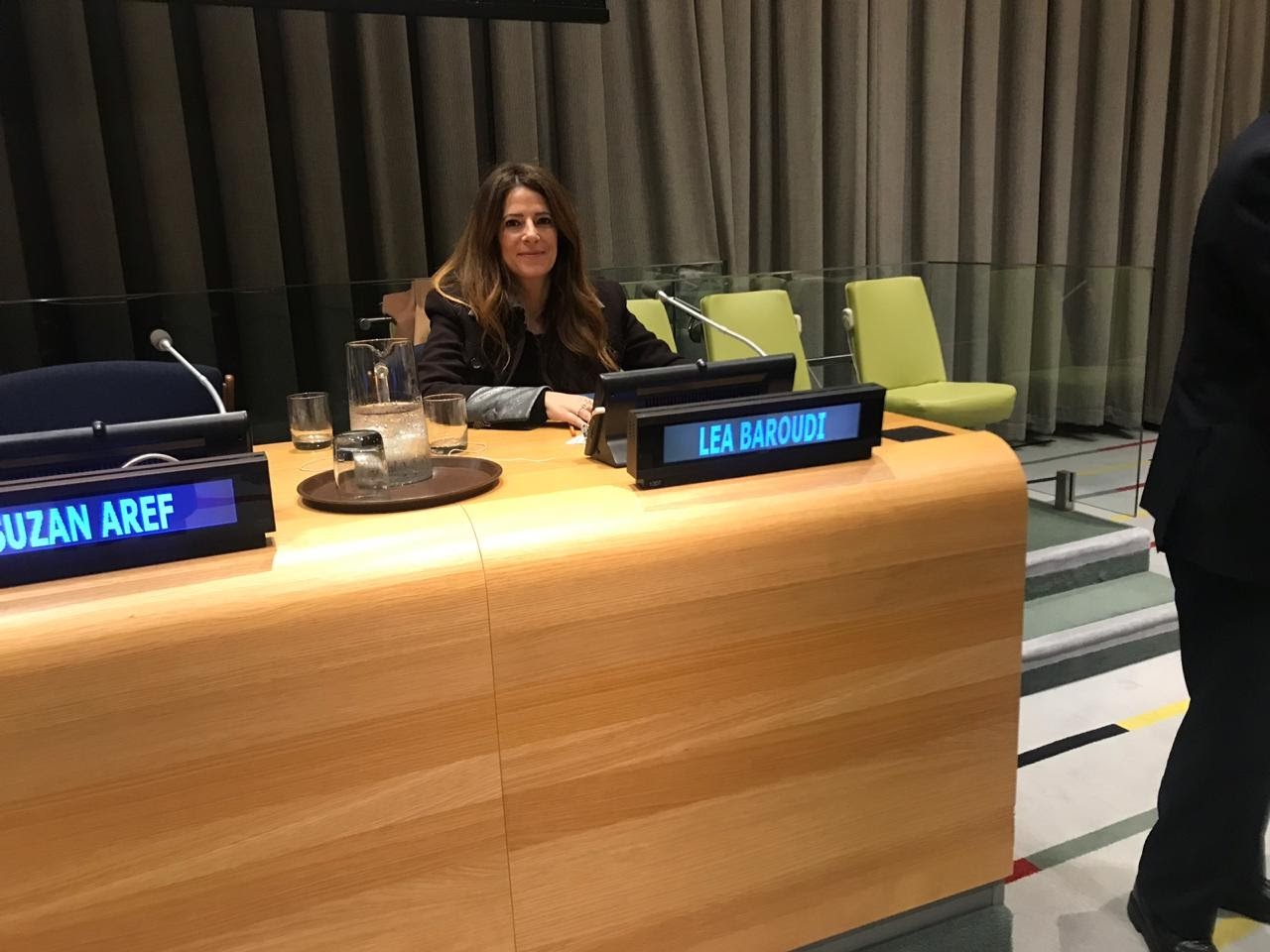
On Thursday 24th January, MARCH’s director Lea Baroudi spoke at the Arria Formula meeting for the United Nations Security Council on Women, Peace and Security. The international conference titled “What’s next for Women, Peace and Security in Middle East and North Africa: The Potential of National Action Plans”, was co-hosted by the Permanent Missions of Germany, the United Kingdom and Peru. The meeting was held in New York and brought together diplomatic and ministerial delegations in addition to a number of prominent civil society representatives. The attendees discussed ways of reinforcing women’s role in peace building and conflict resolution processes in the MENA region. The session also highlighted the importance of National Action Plans in implementing resolution 1325 of the UN Security Council. Through her work with MARCH, Lea Baroudi has managed to develop a unique and unorthodox approach. Her efforts have specifically targeted the youth of the feuding Jabal Mohsen and Bab El Tabbaneh, one of Tripoli’s most marginalized areas. By utilizing art, culture and personal development, Baroudi created a distinctive set of tools to help individuals transcend conflict and tap into a well of potential. Moreover, her holistic method has empowered young women and has succeeded in transforming them from war victims into actors of change. She was not only able to breach the city’s conservative environment but also promote sustainable stability and reconciliation. Baroudi took her acquired expertise to the Arria Formula meeting where she shared bits and pieces of her journey and gave valuable recommendations as well. She started her intervention by describing how one single theatrical play helped foster social cohesion. “Love and War on the Rooftop” forged activists out of former fighters and generated a common goal. After inaugurating “Kahwetna”, a cultural café on the former demarcation line, MARCH had embarked on an inclusive renovation project that allowed men and women to work hand in hand as equals. On the topic of Lebanon’s upcoming National Action Plan, Baroudi noted that it would not reach its full potential without some fundamental changes. MARCH’s director pointed out that so long as Lebanese laws favored a patriarchal system, women were going to continuously be excluded from peace processes. She clarified that “women cannot fulfill their full potential without the support of proper legislation”. Additionally, she commented on the need for better cooperation between government institutions and non-governmental bodies stating that the government should attempt to capitalize on the know-how of NGOs instead of alienating them. She explained that “by utilizing the expertise developed by CSOs, the Lebanese government will equip itself with an innovative set of tools. It could then replicate that successful model throughout the country by tailoring it to fit different regions”. Perhaps her most powerful moment was when Baroudi affirmed that women are quintessential elements of the field. She noted that women’s roles must not be confined to boardrooms and summits and that their presence on the field was an asset not a liability. By alluding to her own experience, Baroudi stressed that women must be perceived as negotiators, strategists and mediators. In her final statement, she pleaded the Security Council to help Lebanon flourish and emphasized on the country’s vital role in the Middle-East saying, “My country acts as a barometer and harbors a very special, yet frail, model”. Baroudi’s powerful speech depicted the story of how one woman successfully defied social and political stereotypes.