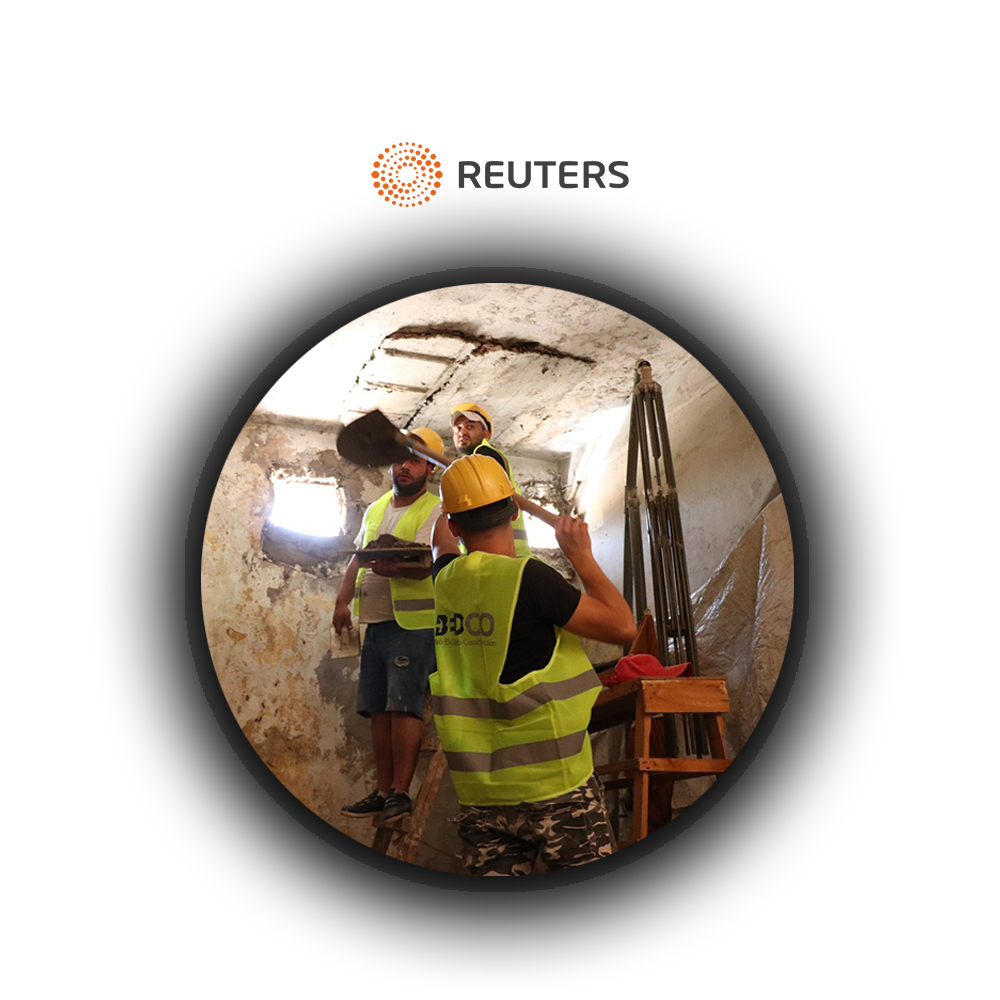
Ban Barkawi AMMAN (Thomson Reuters Foundation) – From former fighters repairing damaged buildings to rural women preparing meals, people from across Lebanon have stepped in to help businesses set up to do good after the seismic port explosion in Beirut. The Aug. 4 blast, which officials have blamed on more than 2,000 tonnes of ammonium nitrate being stored unsafely for years, killed at least 178 people, injured some 6,000, and damaged buildings across a swathe of the city. A list of social enterprises, or businesses set up with a mission to do good, already had teams working in construction and food preparation so quickly adapted and stepped in to help the nearly quarter of a million people uprooted. This included about 40 former fighters from feuding towns in the northern city of Tripoli who learned building skills in a rehabilitation programme run by non-profit peacebuilding organisation March and construction firm Beb El-Dahab (BEDCO). “It was so touching and heartwarming when they called to say ‘we want to come down and help, we don’t care about getting paid’,” said Lea Baroudi, founder of March. “I’m talking about extremely, extremely poor … former fighters who were fighting a sectarian war.” Lebanon is still scarred by civil war three decades ago and reeling from a financial crisis rooted in corruption and economic mismanagement when the explosion ripped through Beirut. Now the nation of 6.8 million people, which includes almost 1 million Syrian refugees, is also battling a surge in coronavirus infections, with the total number of cases at more than 9,330 since February, with 105 fatalities. BUSINESSES DOING GOOD As Lebanon faced ever increasing social and environmental challenges in recent years, a rising number of social startups have emerged to tackle issues ranging from garbage disposal to clean drinking water. According to the Makesense Organisation, which helps entrepreneurs solve environmental and social problems, in 2017 there were more than 200 social enterprises in Lebanon. No more recent figures were available. Alfanar, a philanthropy organisation that supports Arab social ventures, launched a fundraising appeal for its network of social enterprises after the blast, adding March-BEDCO to the list so it could pay workers. Alfanar’s Lebanon country director Michelle Mouracade said the country’s economic crisis had already disrupted the work of social enterprises that have had to cut staff and salaries, and slashed their revenues by 60 to 75% since October. “It’s really difficult but at the same time, social entrepreneurs are by definition risk takers. They’re resilient and their mission is about finding opportunity when there are problems,” she told the Thomson Reuters Foundation. Mouracade said people from vulnerable communities had come to depend on social enterprises to feed their families due to the financial situation, the coronavirus and now the blast. The Souk el Tayeb market, Lebanon’s first farmers market where about 100 small-scale farmers and producers sell fresh produce, was temporarily closed after the explosion destroyed its offices, market and kitchens, said founder Kamal Mouzawak. “They live from the sales of their produce,” said Mouzawak who launched the social enterprise in 2004 to encourage sustainable agriculture. “It was one of the most difficult moments of my life because how can I feel like I’m stopping everything?” But with business at a standstill, Mouzawak was able to hire several cooks from Souk’s sister dining business, Tawlet, where women from various rural villages and underprivileged communities prepare meals, and launched an emergency kitchen. From their undamaged kitchens, they are providing more than 1,000 meals a day for volunteers on the frontline and victims. Mouzawak is hoping that a fundraising campaign for 500,000 pounds ($660,000) will rebuild ruined spaces and restore the financial lifeline for the teams at Souk el Tayeb and Tawlet that train and help migrant workers, rural women and refugees. Mouracade said social entrepreneurs know how to act quickly in a crisis, as was evident at the outbreak of the coronavirus when businesses started to make masks and tap overseas markets. “By providing people with love and support and understanding, you can see how things can change,” Baroudi said. “This is what we want Lebanon to be.”
Tag: Cooperation
À BEYROUTH, DES JEUNES MARGINALISÉS APPRENNENT À VIVRE ENSEMBLE
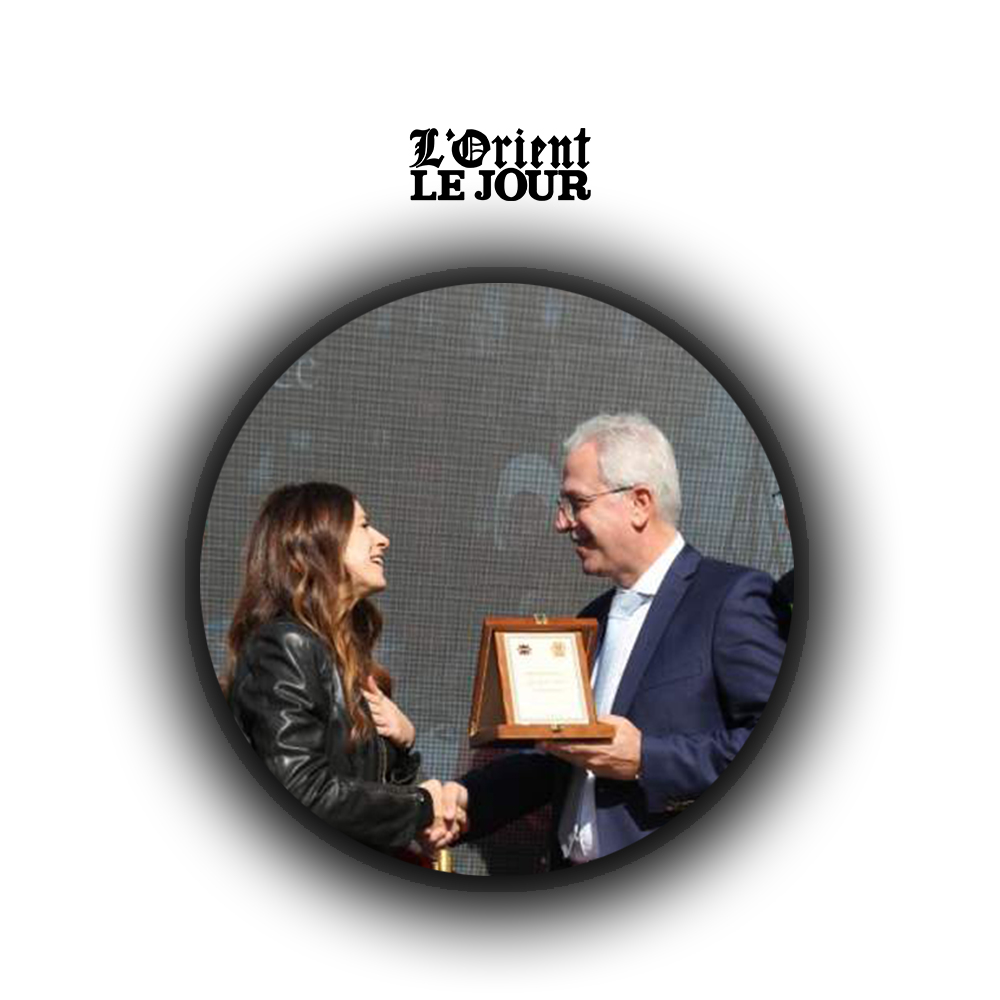
Nada MERHI | OLJ SOCIAL L’ONG March a inauguré hier le centre de la Défense civile, dans le secteur Cola, au terme de près six semaines de travaux dans le cadre de ses projets de capacitation de la jeunesse marginalisée. Au siège régional de la Défense civile dans le secteur Cola, à Beyrouth, l’ambiance était hier à la fête. Les volontaires en uniforme s’activent à aligner les chaises, arranger le son, monter la tribune… Au terme de près de six semaines de travail assidu, l’heure était à l’inauguration de cet espace rénové grâce à une initiative de March, une ONG qui œuvre depuis sa fondation à la capacitation des jeunes des régions « oubliées » et « marginalisées », en les impliquant dans des projets sociaux. Forte de son expérience réussie à Tripoli où elle est parvenue à réunir, autour de plusieurs projets, au nombre desquels un spectacle, un café culturel et plusieurs chantiers de reconstruction, les anciens combattants des quartiers rivaux de Jabal Mohsen et Bab el-Tebbané, l’ONG a décidé de dupliquer cette expérience à Beyrouth à travers un projet sociétal. « Il était naturel pour nous de penser en premier à la Défense civile, parce que cette institution représente le Liban dont nous rêvons : un groupe de volontaires qui n’hésitent pas à servir leur pays, affirme Léa Baroudi, présidente de March. Malheureusement, ils ne sont toujours pas estimés à leur juste valeur et ne reçoivent pas le soutien nécessaire. » Aussi, pour mener à bout ce projet, l’ONG, qui bénéficie du soutien de l’ambassade de Grande-Bretagne, a recruté vingt jeunes de régions marginalisées de Beyrouth, « qu’on évite » et qui « font l’objet de préjugés » : Ghobeyri, le secteur de la Cité sportive, le quartier dit de « tôle », Chiyah, Tarik Jdidé… Elle a appris à ces jeunes laissés-pour-compte des métiers de construction, tout en leur assurant « tout le soutien nécessaire pour se réconcilier avec eux-mêmes, se rapprocher les uns des autres, et aussi pour devenir indépendants », explique Léa Baroudi. Elle précise que les projets menés par March visent à « briser ces barrières géographiques, communautaires et régionales que nous érigeons ». Une communauté soudée Mamdouh, Samir et Mohammad habitent dans le secteur de la Cité sportive. « Les gens issus de ce quartier sont considérés comme des voyous », avance Mamdouh. « Jusqu’à il y a quelques semaines, je n’avais aucune occupation, renchérit Mohammad. Je suis sans papiers et ne peut donc rechercher du travail. Je passais mes journées entre la maison et la rue. Je n’avais rien d’autre à faire. » Idem pour Waël, 19 ans, habitant Chiyah, qui confie qu’avant d’intégrer le projet, « je végétais à la maison ». « Je passais mon temps à dormir, manger et boire du café », dit-il. Pour ces jeunes, le projet initié par March a été une aubaine. « Mon ami m’en a parlé, raconte Mohammad. L’idée m’a plu. Je sentais que je pourrais opérer un changement dans ma vie. Je n’ai pas eu tort. Je suis analphabète. Dans le cadre de ce projet, j’ai appris à lire. J’ai appris aussi un peu d’anglais et de maths. Maintenant je sais faire des calculs et des factures. Côté professionnel, j’ai appris beaucoup sur les métiers de construction. J’ai appris à les faire avec précision. » Pour Samir, « ce projet revêt une double importance, parce que non seulement j’ai appris un métier, mais j’ai aussi rencontré des jeunes de communautés et de régions différentes ». « Au fil des semaines, nous sommes devenus un groupe soudé, poursuit-il. Nous avons appris à vivre ensemble. Nos querelles ne durent pas longtemps. » Comment pensent-ils continuer après cette expérience ? « Je n’aimerais pas continuer à vivre comme je le faisais avant », assure Mohammad. Mais vu la situation par laquelle passe le pays, il n’espère pas pouvoir trouver du travail rapidement. Léa Baroudi souligne que March n’abandonne pas les jeunes une fois le projet terminé. « À Tripoli, nous avons réussi à placer plus de quarante bénéficiaires de nos programmes dans une entreprise privée, se félicite-t-elle. D’autres ont appris un métier qu’ils exercent. Il est sûr que nous n’allons pas lâcher ces jeunes. Nous poursuivrons avec une petite pièce que Georges Khabbaz, comédien et metteur en scène, a écrite pour eux. Puis nous allons les impliquer dans la rénovation du centre de Bachoura de la Défense civile. Nous trouverons toujours de petites opportunités qui leur permettent de devenir indépendants. » Volontariat, altruisme et dévouement La cérémonie d’hier s’est déroulée en présence notamment du directeur général de la Défense civile, le général Raymond Khattar, représentant la ministre sortante de l’Intérieur. Dans une allocution, il a expliqué que les travaux comprenaient la rénovation du bâtiment existant, la construction de nouvelles salles et l’équipement du centre avec du matériel de secours. Il s’est penché sur les problèmes que rencontre la Défense civile dont les volontaires tardent à être titularisés, « espérant qu’ils le seront au début de l’année prochaine ». L’ambassadeur de Grande-Bretagne, Chris Rampling, a de son côté mis l’accent sur la mission de la Défense civile qui « incarne le vrai esprit du volontariat, de l’altruisme et du dévouement ». « Nous vous avons vu risquer vos vies pour sauver les autres », a-t-il poursuivi, soulignant qu’aujourd’hui, « les jeunes vous le rendent ». Et d’insister : « Le Liban passe par une importante phase de son histoire. Nous avons vu les Libanais à travers le pays exprimer leurs revendications légitimes pour la réforme, la transparence et une meilleure gouvernance. Les Libanais ont montré qu’ils rejettent la division. Ils veulent un Liban uni dans la paix, la prospérité et la coexistence. Aujourd’hui a été l’occasion de réitérer notre soutien aux volontaires de la Défense civile qui donnent leur temps pour sauver la collectivité. » Georges Khabbaz, qui soutient inconditionnellement March, a affirmé que les ONG, avec à leur tête March, ont du mérite parce qu’elles ont contribué à l’éveil que le Liban connaît depuis
افتتاح مركز بيروت الاقليمي للدفاع المدني في منطقة الكولا
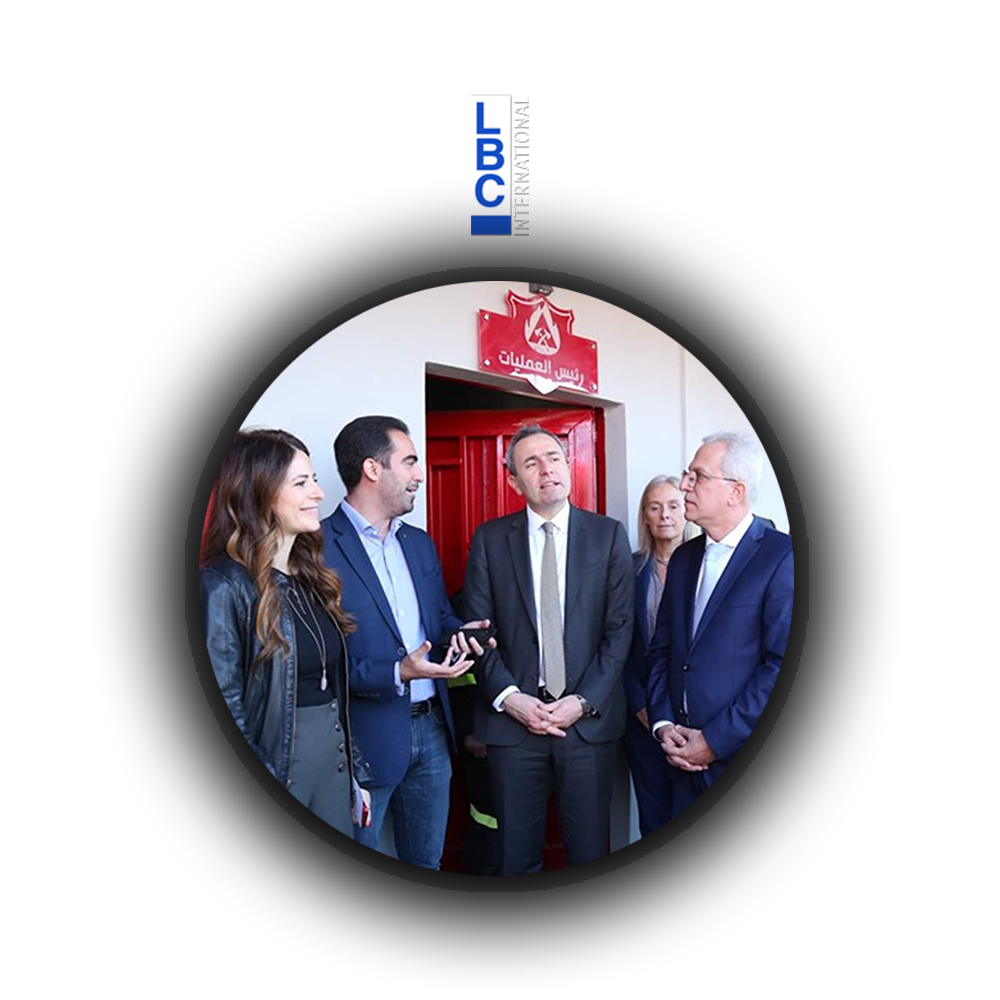
LBC Group TV تم الاحتفال بافتتاح مركز الدّفاع المدني الإقليميّ في منطقة الكولا بحلّته الجديدة. وأنجزت جمعية مارش عمليّة إعادة التأهيل وبدعم من السفارة البريطانية في بيروت. وتمت عملية إعادة التأهيل على أيد شبانٍ وشابات المهمشين والمنسيّين من مختلف أرجاء بيروت أبرزها مناطق المدينة الرياضية، الشياح وطريق الجديدة. وهدف هذا المشروع الى تعزيز حس الوحدة والتضامن بين خلفيات متعددة متجاوزا قيود الطائفيّة. وعمدت هذه المبادرة على تمكين الشباب من خلال مساعدتهم على اكتساب مهارات مهنيّة جديدة مثل التجصيص، الطلاء، الأعمال الكهربائية والتصميم الجرافيكي عبر تدريب تطبيقيّ بالإضافة إلى صفوف اللغات والرياضيات مما يتيح لهم فرصة في مستقبل أفضل. وألقت رئيسة جمعيّة مارش ليا بارودي كلمة قالت فيها : “يجب تسليط الضوء على كل مبادرة إيجابيّة. نحن في مارش نعمل على دعم وتمكين شباب المناطق المهمشة. ونعتبر أن هذه المبادرة عابرة للطوائف تمثّل كل لبنان بعيداً عن اختلافاتنا وهذا ما ترمز إليه مؤسسة الدفاع المدنيّ”. بدوره قال العميد خطار :”إن هذه المبادرة المميزة تستحق التوقف عندها لكونها تظهر عمق إيمان الهيئات الدولية والإقليمية بجوهر رسالة المديرية العامة للدفاع المدني. وتابع: “إن المديرية العامة للدفاع المدني، التي كانت دوما إلى جانب المواطن ولم يتقاعس عناصرها عن القيام بواجبهم في زمن السلم، كما في زمن الحرب، على رغم كل الظروف والتحديات، ستواصل العمل الدؤوب”. وكانت كلمة لسفير بريطانيا كريس رامبلينغ الّذي قال: “أنا جد فخور بما قامت به ايدي الشباب. وهذا ليس غريبا على نشاطات جمعية “مارش” التي تعمل منذ البداية على تفعيل ونشر لغة الحوار والتواصل. ونحن من الداعمين لها منذ البداية”.كما أضاف: “بعد الحريق الذي تعرض له لبنان في تشرين الاول، رأينا بأم العين كيف كان ابطال الدفاع المدني يحاربون النيران من دون تجهيزات متطورة. من هنا، ارى اليوم هذا التأهيل عربون شكر لهؤلاء الشباب الابطال يكرّم تعبهم بالرغم من كل الظروف القاسية. فإنهم مثال للغيريّة، التفاني والوطنيّة “.
افتتاح مركز بيروت الاقليمي للدفاع المدني في منطقة الكولا
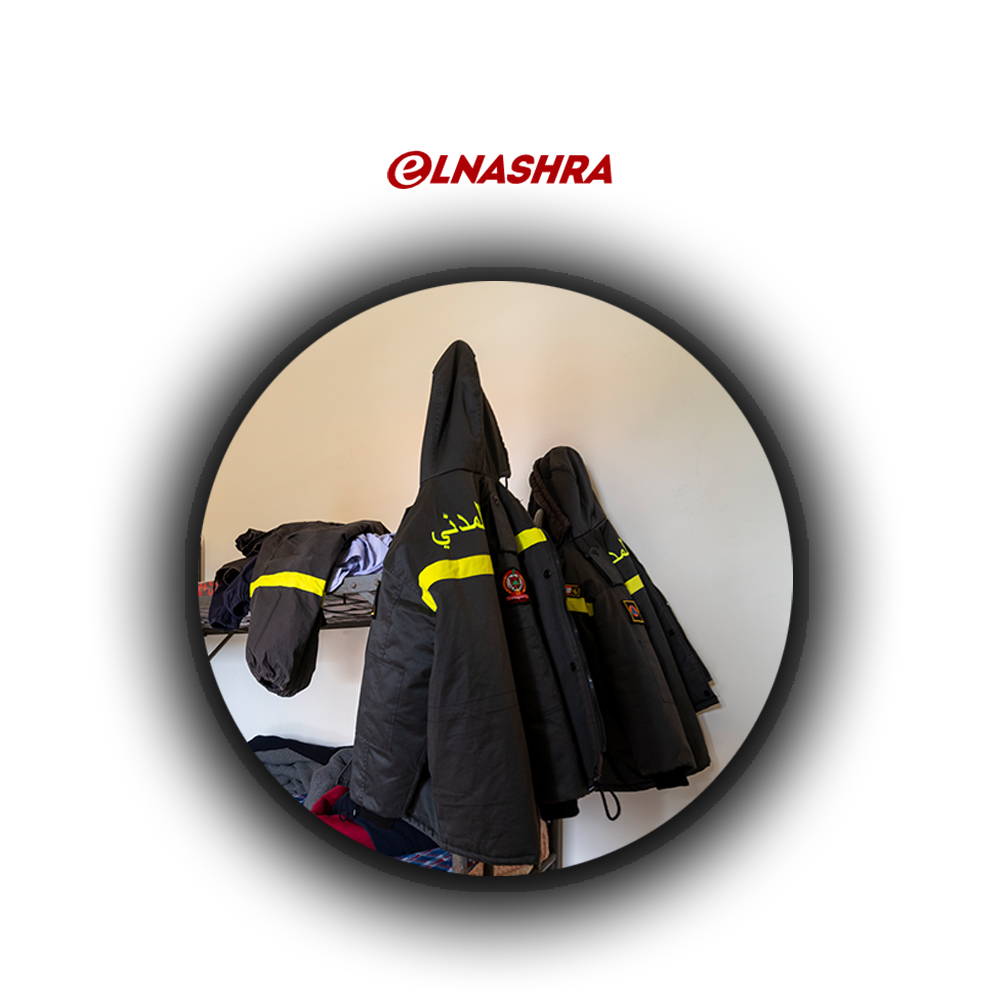
LNASHRA تم الاحتفال بافتتاح مركز الدّفاع المدني الإقليميّ بحلّته الجديدة في حضور مدير العام الدّفاع المدني العميد ريمون خطار، ممثلا وزيرة الداخلية والبلديات في حكومة تصريف الأعمال السيدة ريا الحسن، سفير بريطانيا في لبنان الأستاذ كريس رامبلينغ، رئيسة جمعيّة “مارش” ليا بارودي وعناصر من الدفاع المدنيّ بالإضافة الى شخصيّات أخرى بارزة مثل الممثل والمخرج جورج خبّاز. أنجزت عمليّة إعادة التأهيل على أيد شبانٍ وشابات المهمشين والمنسيّين من مختلف أرجاء بيروت أبرزها مناطق المدينة الرياضية، الشياح وطريق الجديدة. وأطلقت الجمعيّة هذا البرنامج ضمن نطاق مبادرة “العمل الجماعيّ من أجل الوطن” حيث اختارت التعاون مع الدفاع المدنيّ اللبنانيّ لما تمثله هذه المؤسسة من مبادئ. فإن العيش المشترك، التضحية والولاء للوطن عناوين أساسيّة في رسالة الدفاع المدنيّ تتجسد أيضاً في عمل مارش. تخلّل الحفل فيلم وثائقيّ جسّد روح المشروع وعرّف الحاضرين على بعض الشّباب الّذين شاركوا في البرنامج. كما قام الضيوف بجولة على المبنى وتعرّفوا على أبرز ملامحه الجديدة. أحيت الإفتتاح فرقة الدفاع المدنيّ بالإضافة إلى ألحان شبّان من “هنا بيروت”- مركز مارش الثقافيّ- مضيفين لمسة موسيقيّة رائعة
GET TOGETHER! YOUTH CULTURAL EXCHANGE INITIATIVE
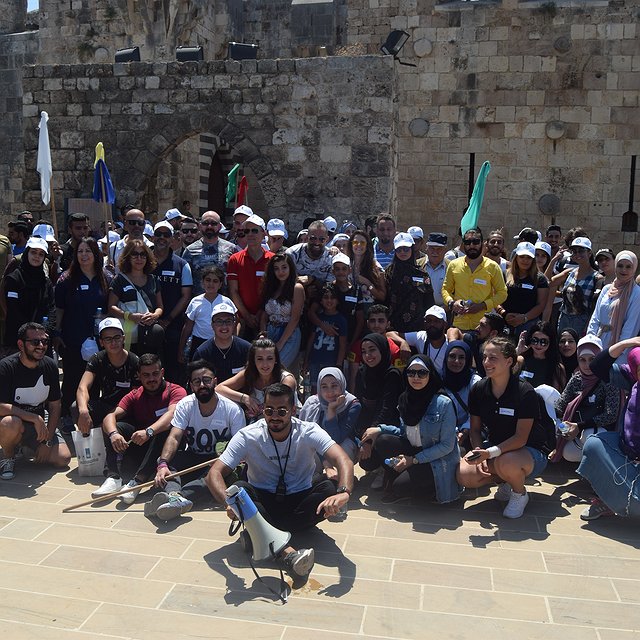
Saturday August 24th marked the second of two visits of a youth cultural exchange initiative that MARCH, in collaboration with the Jabal Sheikh Municipality Federation, had set up in an effort to promote social cohesion. The initiative was made possible through the help and support of the Dutch embassy in Lebanon. Its goal was to bring together youth from different backgrounds across Lebanon to volunteer and discuss ideas, thoughts and concerns as a means to encourage constructive dialogue and inclusivity. During a first visit to Jabal El Sheikh on July 13th, Tripoli’s youth met with the locals and were able to explore the village through an array of dynamic activities. The trip was both an educational opportunity and a chance to create friendships and bonds between the two communities. Following a successful initial exchange, Tripoli was the project’s second destination. The initiative brought together youth from various backgrounds across Lebanon. MARCH hosted a group from Jabal el Sheikh- in collaboration with Jabal el Sheikh Municipalities Federation, in addition to a group from Qana- in collaboration with the Cana Youth Association, and lastly a group from Baalbak- in collaboration with LOST, The Lebanese Organization for Studies and Training. Our visitors were welcomed by youth from Beb El Tabbaneh and Jabal Mohsen joined by two incredibly special guests: Dutch Ambassador in Lebanon, His Excellency Jan Waltmans and Lebanese basketball all-star Fadi El Khatib. Overall, the initiative managed to gather 130 individuals from different backgrounds across Lebanon. Upon arrival to Tripoli, the youth enjoyed a traditional local breakfast on the Abdel Wahhab Island in Mina. The meal was followed by a trip around the city which featured a tour of Tripoli’s most iconic sites. The group explored the Citadel of Raymond de Saint-Gilles and took a walk through the old souks, accompanied by a guide who familiarized them with the city’s history and culture. The youth were also introduced to the MARCH’s mission and work in Tripoli during a pit-stop to the organization’s cultural cafe- Kahwetna. Community service was an active component of the initiative, therefore a small clean-up campaign was conducted on Syria Street. With team spirit and unity being a central theme of the visit, the day was concluded with a friendly and dynamic football tournament. This sports activity rallied the youth around their passion for the game and proved to be a powerful tool for creating and fostering common ground. This exchange has allowed the youth of Rachaya, Baalbek, Qana and Tripoli to accept their differences on the one hand, and embrace their similarities on the other as they share a number of social, economic and historical commonalities. In a country like Lebanon, where diversity is a double-edged sword, promoting mutual understanding between different communities is essential. Exposing youth to different traditions, habits and heritages is a wonderful learning experience. MARCH hopes to be able to recreate this experience between other Lebanese regions as this would help transcend stereotypes and preconceived notions of “the other”.
HOW FORMERLY EMBATTLED TRIPOLI NEIGHBORS ARE NOW STRUGGLING TOGETHER
Al Monitor TRIPOLI, Lebanon — In the final weeks of the Muslim holy month of Ramadan, more than 100 people gathered on May 25 for iftar (the breaking of the fast) in Tabbaneh Park, one of the only green spaces in the Bab al-Tabbaneh neighborhood of Tripoli. The meal was the third of its kind organized for residents of Sunni-majority Bab al-Tabbaneh and neighboring majority-Alawite Jabal Mohsen, two districts that engaged in deadly on again, off again violence from 2008 to 2015. The two communities coming together for iftar is a testament to the progress that has taken place in the area over the last four years. “The annual iftar is an example where Tabbaneh Park hosts people from diverse backgrounds,” said Mohamad Minkara, deputy director of the Lebanese Center for Research and Studies, which helped organize the event, held in conjunction with the Tripoli municipality and others. “People’s hope for a peaceful life and coexistence with diversity has never been destroyed.” The May 25 iftar is but one of the many ways in which nongovernmental organizations (NGOs) have worked to implement social programs to address the challenges Bab al-Tabbaneh and Jabal Mohsen’s residents face. In the years after clashes wracked the two neighborhoods, social interaction between them has markedly increased, and opportunities provided by NGOs have improved employment prospects for locals, connected students with educational assistance and created common spaces where residents from both communities can gather. Such bright spots remain few and far between, however. Although the government of Tripoli offers limited assistance programs, residents and NGOs alike cite ongoing unemployment and a lack of adequate government involvement as serious barriers to broader socioeconomic stability in these neighborhoods. According to NGO staff who work there, the possibility remains that under certain circumstances, violence could one day return. The clashes between 2008 and 2015 in Bab al-Tabbaneh and Jabal Mohsen left hundreds dead. The conflict was driven by political, socioeconomic and arguably sectarian factors and later exacerbated by the Syrian civil war that erupted next door in 2011. In the years since the fighting stopped, a number of initiatives have focused on art, storytelling and social endeavors to strengthen communities there. In 2016, Lea Baroudi, co-founder and director of the MARCH Lebanon, opened Kahwetna, a coffee shop on Syria Street, the main thoroughfare that separates Bab al-Tabbaneh and Jabal Mohsen. The cafe promotes coexistence by providing youths access to art, workshops and a space to meet people from the other neighborhood. Baroudi told Al-Monitor that she has witnessed the transformational impact the cafe has had on young people in the area. When a cafe patron adopts a more open attitude toward his or her neighbors, it has a ripple effect on their families and friends. “I feel that there has been a shift and a change,” Baroudi said. “I feel that [youths from both neighborhoods] are more and more realizing that they are both suffering a lot from what’s happening.” In addition to offering cultural opportunities, Baroudi and MARCH have also sought to address the underlying poverty and unemployment that created the conditions for violence. One ongoing project, Bab al-Dahab, has trained young men and women in manual and technical skills and then employed them to rebuild shops and rehabilitate streetscapes. As participants note, the program necessitates interaction, as people from both neighborhoods work on projects together. Ahmad Shaaban, a former fighter from Bab al-Tabbaneh, said his work with MARCH changed how he views people from the neighborhood across the street from him. “We had the idea about Jabal Mohsen that I don’t like them, and they don’t like me,” Shaaban told Al-Monitor. “But when I began working with them, everything changed. Now, we’ve [turned] a new page.” Baroudi emphasized that Bab al-Dahab was designed to help participants develop basic job and interpersonal skills that they can take to other workplaces. She said that since the project began, MARCH has secured employment for 45 young men at Café Najjar, a major coffee company based in Beirut. MARCH has not been alone in such efforts. In 2017, the street art duo Ashekman, consisting of twins Omar and Mohamed Kabbani, worked with residents to paint a miles-worth of rooftops in the two neighborhoods to spell out the Arabic word for “peace” as part of Operation Salam. Omar told Al-Monitor that he and his brother employed 52 local residents for three weeks to complete the project. Organizations have also focused on education. Minkara told Al-Monitor that tutoring classes offered by his group have contributed to a 60% increase in students passing official exams. Another NGO, Ruwwad al-Tanmeya, has focused on securing scholarships and internships for students and fostering community leadership and entrepreneurship in the area since 2012. Hoda Rifai, the youth officer at Ruwwad, told Al-Monitor that even though the impact of such programs is not always as extensive as it could be, even a small improvement can change several lives at once. “For me, if one person from Ruwwad starts to work, he can help a household,” she said. “He can help his brothers and sisters. If the father is jobless, he can help him.” Yet, when thinking more broadly, Rifai is hardly optimistic. “If you look [at it] economically, the number of dropouts from schools, the number of jobless people is always the same, and it is even worse [today] because now the economic situation in all of Lebanon is getting worse,” she said. Ahmad, an unemployed youth from Bab al-Tabbaneh, praised the work that NGOs like MARCH are doing but confirmed to Al-Monitor that the economic realities have worsened over the last four years. Faced with daunting challenges like unemployment, a lack of healthcare access, poor education and rampant drug addiction, Baroudi, Rifai and residents all told Al-Monitor that NGOs alone cannot pull the neighborhoods out of crisis. According to them, more government intervention is a must for Bab al-Tabbaneh and Jabal Mohsen. Tripoli city council member Chadi Nachabe told Al-Monitor that in addition to providing several initiatives
LÉA BAROUDI, MEMBRE DE L’ORDRE BRITANNIQUE DE CHEVALERIE
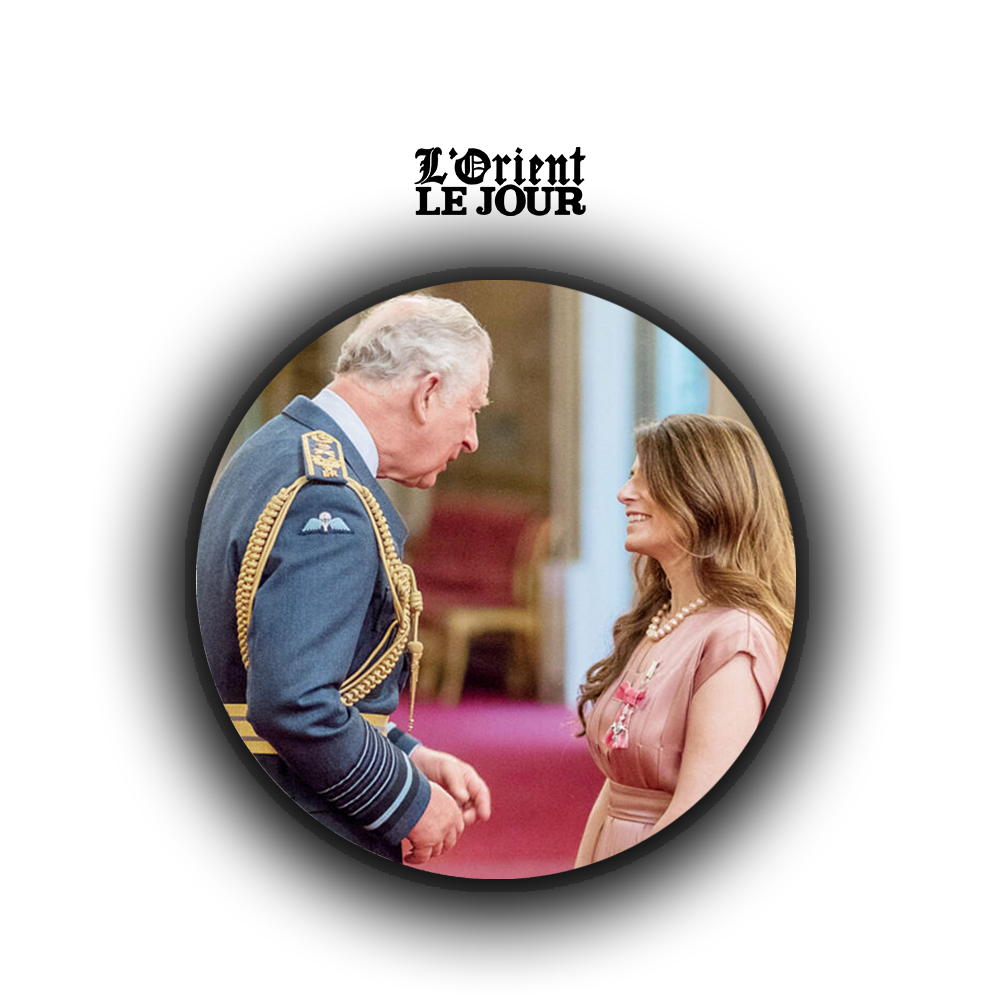
L’Orient- Le Jour Léa Baroudi, fondatrice de l’ONG March, est depuis avril dernier membre de l’Ordre britannique de chevalerie, une distinction qui lui a été accordée par la reine Elisabeth II d’Angleterre. La décoration lui a été remise par le prince Charles, lors d’une cérémonie au palais de Buckingham, à Westminster. Mme Baroudi est la cinquième Libanaise à devenir membre du prestigieux Ordre britannique de chevalerie. Cette distinction salue son engagement au service des droits humains, pour la construction d’une paix durable. Elle met en exergue ses efforts pour briser les barrières religieuses, faciliter le dialogue entre les communautés et engager la jeunesse locale dans ses projets, dans les régions en conflit au Liban. C’est à Tripoli, dans les quartiers défavorisés de Bab el-Tebbané et Jabal Mohsen que Léa Baroudi et son ONG March se sont engagées auprès des communautés les plus vulnérables. Dans ces deux quartiers ravagés par les conflits, elle a choisi l’art et la culture comme moyens de répandre la tolérance, la réconciliation et la paix à plus long terme. À travers le théâtre, elle a réuni en 2015 seize jeunes Tripolitains issus de ces deux voisinages au sein d’une pièce baptisée Amour et guerre sur le toit. Inspirée d’histoires personnelles de vies déchirées par la guerre, la pièce a transformé d’anciens guerriers en acteurs et d’anciens ennemis en amis. Les défis étaient, certes, immenses et la militante a rencontré beaucoup de réserves, au départ. Certains bénéficiaires participaient avec leurs armes, alors que d’autres s’absentaient. Mais au final, leur implication a renforcé leur sentiment d’appartenance. Elle leur a fourni un exutoire constructif et leur a permis de dépasser les stéréotypes toxiques qu’ils ont hérités des générations passées. March et Léa Baroudi ont réitéré cette expérience en 2017, en améliorant sans cesse les procédés permettant de transcender la violence, la haine et les conflits. Au final, 300 jeunes ont bénéficié de l’expérience. Parallèlement, en 2016, Mme Baroudi a exploré une nouvelle initiative, Beb el-Dahab (BED), qui est devenue un véritable mouvement social. Un mouvement qui a transformé de jeunes combattants désœuvrés de Bab el-Tebbané et Jabal Mohsen en « rebâtisseurs » de leurs communautés, capables aujourd’hui d’unir leurs efforts. Ces jeunes bâtisseurs ont déjà reconstruit et rénové plus de 150 commerces de la rue de Syrie, ancienne ligne de démarcation entre les deux quartiers de Tripoli qui s’affrontaient autrefois. Et comme l’égalité des genres est d’une importance capitale, après avoir aidé les jeunes femmes de ces deux quartiers à développer leurs compétences en matière de design et de marketing, March les a mis à contribution pour aider les commerçants à développer, décorer et faire fructifier leurs affaires. C’est désormais au café Kahwetna, premier hub culturel de l’ONG March, que se retrouvent les jeunes bénéficiaires de l’association, rue de Syrie à Tripoli. Ils y apprennent des métiers comme le graphic design, la musique ou autres, tout en suivant des sessions de gestion de leur colère. En 2018, l’association a inauguré son second centre culturel à Beyrouth, baptisé Hona Beirut.
HONA BEIRUT FOOTBALL TOURNAMENT!
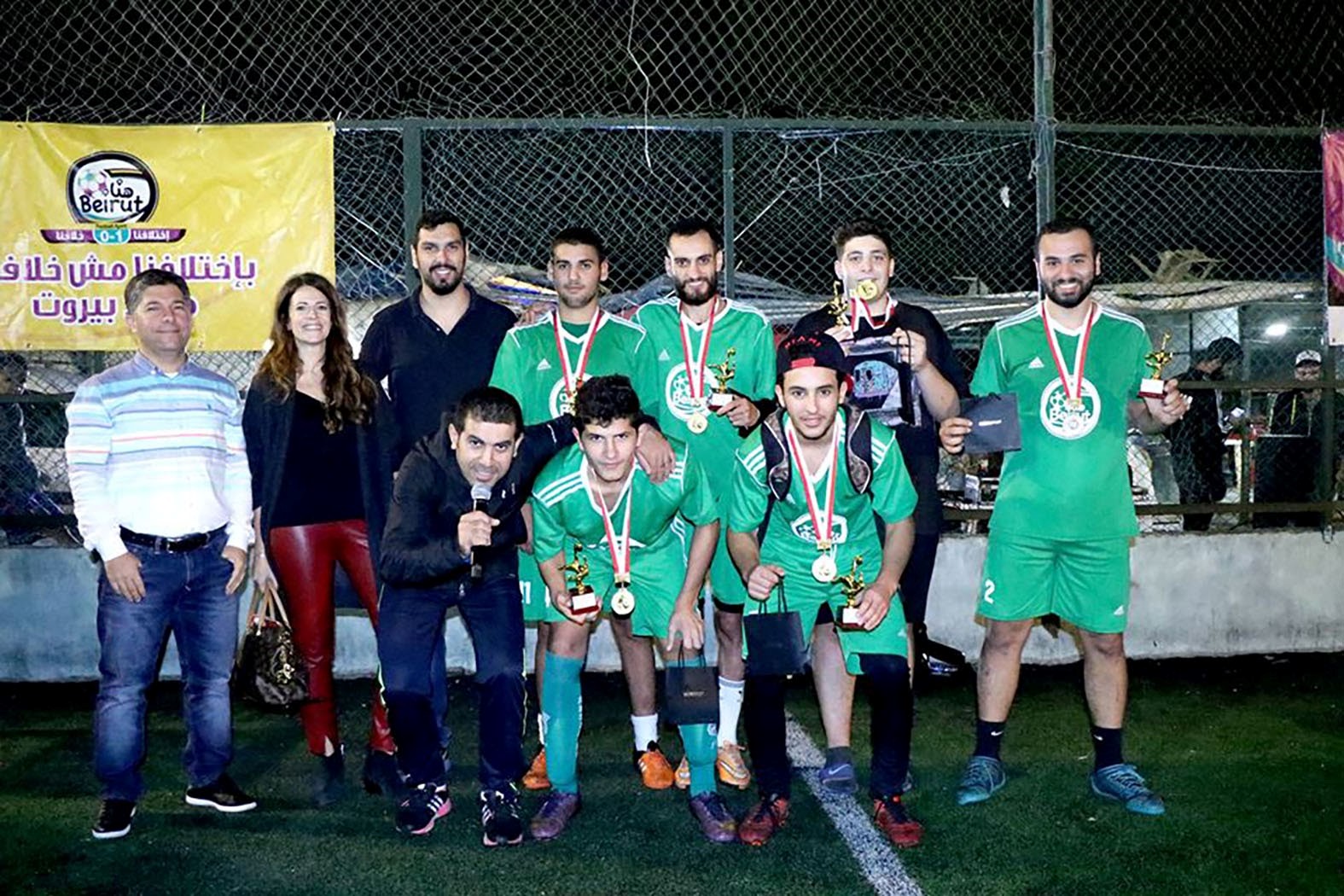
Under the patronage of the Governor of Beirut H.E, Judge Ziad Chebib, and in cooperation with the Lebanese Football Association and Right to Play Organization, MARCH organized on Monday November 12, 2018 the 1st edition of HONA BEIRUT FOOTBALL TOURNAMENT. It took place at Qasqas football fields in Beirut in the presence of the press that covered the event. The 4 days tournament included 65 individuals divided into 8 diverse teams. They competed for the title, all united in their diversity. The event gathered youth from different backgrounds and areas in Beirut. The teams mirrored Lebanon’s cultural and religious diversity. Before the final game, MARCH gathered the participants in a four-day training in collaboration with Right to Play to build their football skills and team spirit before the tournament. The last day of the 4 days tournament included artistic performances, a friendly game led by professional local players from the Lebanese Football Association, and the big final match between the two winning teams. The games on the other hand were covered by a live commentator that gave a professional spirit to the tournament.