Les habitants des quartiers de Jabal Mohsen et Bab el-Tebbané se sont longtemps livrés à des affrontements sanglants les uns contre les autres. Désormais, ils se réunissent autour de projets civiques grâce au travail d’une association menée par un groupe de femmes. Un jour d’hiver à Tripoli, deuxième plus grande ville du Liban, des jeunes sont assis dans un café au bout de la rue de Syrie. Ils rient et discutent autour d’une boisson, alors que la pluie s’abat avec la régularité d’un métronome sur la chaussée, dissipant l’air épais de la ville. Il n’y a pas si longtemps, une telle scène était improbable. Kahwetna (« Notre café » en arabe) se situe au point de rencontre entre les quartiers de Jabal Mohsen et Bab el-Tebbané de Tripoli, où des affrontements sectaires entre ces deux communautés ont ravagé la vie des habitants pendant des années. Mais Kahwetna est un espace sûr. Il dispose de deux entrées distinctes – une pour chaque quartier. Derrière cette initiative, il y a Léa Baroudi, cofondatrice et coordinatrice de March Lebanon, une association libanaise qui œuvre pour la promotion de la cohésion sociale à travers la consolidation de la paix et la résolution des conflits sectaires au Liban. Kahwetna, qui a ouvert ses portes en 2016, est l’une des solutions proposées par l’ONG. La jeune femme a grandi pendant la guerre civile libanaise et, longtemps après la fin de celle-ci, elle était choquée de voir que « même les gens de [son] âge étaient divisés suivant des courants politiques sectaires ». Elle est devenue médiatrice certifiée et, parallèlement à son travail de consultante en affaires, a aidé à mettre en place des initiatives pour les jeunes avec un groupe d’amis. Sa passion a finalement pris le dessus, et c’est ainsi qu’est né March en 2011. « Love and War on the Rooftop » C’est au théâtre que tout a vraiment commencé. Léa Baroudi s’intéressait particulièrement à l’utilisation de l’art comme moyen de consolider la paix. Elle a alors eu l’idée de monter une pièce de théâtre entre les factions belligérantes à Tripoli. C’était en 2015, et les affrontements continus entre Jabal Mohsen et Bab el-Tebbané venaient de prendre fin avec le déploiement de l’armée libanaise dans la région. Léa, qui vit à Beyrouth, a commencé par se rendre à Tripoli les week-ends pour discuter avec les habitants. Quelques combattants ont fini par accepter de l’aider à rassembler des jeunes à auditionner pour son spectacle. Un véritable exploit, vu le contexte. « Nous pensions qu’une fois les jeunes réunis dans une même salle, une bagarre finirait irrémédiablement par éclater. J’ai rejeté l’idée de la pièce, je n’y ai pas participé au début », se souvient Ali, un ex-combattant devenu leader communautaire. « J’ai regardé la pièce, mais j’étais contre le fait que mon ami y participe », explique Zafer, lui aussi un ex-combattant qui travaille avec March. « Mon ami m’a dit : “En fait, je ne vais pas participer. Je vais voir leurs visages et cela nous aidera à leur tirer dessus plus tard”. Mais, au fil des répétitions, ils ont appris à se connaître et à s’apprécier, poursuit Zafer. J’avais aussi prévu de leur faire du mal, renchérit Ali. Mais nous avons changé d’avis quand nous avons vu que beaucoup de nos hommes participaient au projet et qu’ils seraient aussi blessés. » Léa Baroudi se souvient que nombre d’entre eux venaient aux répétitions armés. « Je me rappelle qu’au lieu de chercher des téléphones, nous cherchions des armes… Des lames de rasoir cachées sous la langue, des pistolets dans les poches ou dans les chaussettes, des couteaux. » La pièce devait s’inspirer de la vie des jeunes des deux quartiers, et les participants devaient donc partager leurs histoires. Il n’y avait aucun script. « Quand ils ont partagé leurs histoires, ils se sont rendu compte qu’ils se ressemblaient plus qu’ils ne le pensaient. Et c’est ainsi que les choses ont débuté », se remémore la jeune femme. « Nous avons réalisé que nous étions plongés dans la même souffrance. La même pauvreté. Que nous avions les mêmes besoins », confie Ali. C’est ainsi que la pièce Love and War on the Rooftop (Amour et guerre sur les toits) a vu le jour, avant de tourner dans tout le Liban. « Les gens nous ont raconté que, pendant les conflits, tout se passait sur les toits : des combattants se tirant dessus aux amis jouant aux cartes, sans oublier les amours secrètes », explique Léa Baroudi. Celle-ci croit fermement que la pierre angulaire de la paix est la connexion humaine et affirme qu’il n’y a rien de « magique » à cela. C’est juste une question d’intuition. « Lorsque vous travaillez dans des initiatives de consolidation de la paix, les activités que vous menez ne sont pas le plus important, mais les émotions que ces activités suscitent. Qu’est-ce que cela éveille chez les gens ? L’expérience intérieure. » La prison comme seul lieu de rencontre Ali a finalement participé aux activités de March en 2019, après avoir purgé cinq ans dans la prison notoirement lugubre de Roumié. « J’aurais pu faire tellement de choses pendant ces cinq années. » « Nous n’avions pas d’occasions ou d’endroits pour nous rencontrer, avant », ajoute-t-il. Hormis la prison. Léa Baroudi se souvient avoir demandé aux participants, un jour qu’ils répétaient, s’ils avaient des amis de « l’autre côté ». Une seule personne a répondu par l’affirmative. « Je lui ai demandé : “Où l’as-tu rencontré ?”. Il m’a dit : « En prison. » » « Vous vivez littéralement à quelques mètres l’un de l’autre. Il a fallu que tu ailles en prison pour le rencontrer ? » réagit-elle alors. « Quand Kahwetna a ouvert, ils ont eu peur. Ils me disaient : « On va se faire bombarder. Ils vont faire exploser cet endroit… On nous a déjà traités de traîtres parce qu’on est avec des gens de l’autre côté. » Huit ans plus tard, Kahwetna fourmille d’activités. Derrière une
Tag: Theater
THEATER FOR RECONCILIATION: Uniting Communities through Art and Culture
MARCH believes in the transformative power of art and culture as catalysts for positive change. This belief has inspired numerous initiatives such as the Theater for Reconciliation. Launched in 2015 in Tripoli, Lebanon, this groundbreaking program has successfully united and reconciled youth from diverse backgrounds through the medium of theater. By providing a safe and inclusive space for young individuals to share their stories on stage, break down stereotypical barriers, foster understanding, and deconstruct preconceived judgments. This innovative peacebuilding and rehabilitation tool, provides a platform for constructive dialogue and self-expression. Through the safe and inclusive space it creates, it allows participants to process any political, religious or personal grievances they may have and better understand “the other” away from divisive, prejudiced and stereotyped narratives. The Sunni neighborhood of Beb El Tabbaneh and the Alawite neighborhood of Jabal Mohsen had been in a long-standing, cross-generational feud that had fostered animosity and resentment between their respective communities. Their conflict seemed to be rooted in their religious and ideological differences and garnered national attention. The volatility of the area coupled with prejudice and misinformation led to the ostracization of that part of Tripoli. Following the violent clashes that had erupted in 2011 between Jabal Mohsen and Beb El Tabbaneh, MARCH decided to try and reconcile youth from both sides of the frontlines. Love and War on the Rooftop: The Beginning of a Journey: The journey of Theater for Reconciliation began with the production “Love and War on the Rooftop” in Tripoli. The play brought together young people from Jabal Mohsen and Beb el Tebbeneh, two historically divided communities with a long-standing history of conflict. Through this powerful performance, the youth were able to bridge their differences, forging connections that transcended their cultural and social boundaries. The idea was to create a theater play inspired by their war-torn lives and personal experiences and offer them a chance to tell their own story and set their own narrative. Following the ceasefire imposed by the army in 2014, we held auditions to recruit young men that would be willing to share a piece of themselves and their history. The process was extremely challenging but we ultimately managed to convince 16 individuals to take part in the play. The project was experimental, its goal was to encourage constructive dialogue and build bridges away from sectarian divide. We wanted to help the participants see past the stereotypes they had of one another. Although there were some challenging moments, the initiative proved to be quite cathartic. It helped them rediscover their identity and see each other in a different light. Enemies became friends and former fighters became actors. Expanding Horizons: A Growing Movement Following the success of “Love and War on the Rooftop” Theater for Reconciliation expanded its reach to other areas of Lebanon. Initiatives like “Tripoliyat” and “Habib El Kel” in Akkar, as well as “Hona Beirut” and “Cafe b Kaffak” in the capital Beirut, continued to build bridges between communities and inspired open dialogues about unity and diversity. Taarafou: The Latest Triumph: The most recent addition to Theater for Reconciliation is “Taarafou”, a comedy play that brought together 20 young men and women from different communities in Beirut. Written and directed by Yehya Jaber, the play was made possible as it draws inspiration from the real-life experiences of its cast members, creating a performance that celebrates the diversity of Lebanon’s youth. A Message of Unity and Acceptance: Theater for Reconciliation, including its latest production “Taarafou” has played a pivotal role in sparking meaningful conversations around embracing diversity as a source of unity. By providing a platform for young individuals to share their stories and experiences, the program has challenged divisive narratives and fostered a sense of understanding and acceptance among Lebanon’s youth. Lastly, Theater for Reconciliation stands as a beacon of hope in a community once divided by conflict and misunderstanding. Through the power of art and storytelling, this transformative program continues to bridge gaps between communities, proving that unity and acceptance can be achieved through shared experiences and empathy.
MTV – تعارفوا في مهرجان إهدنيات
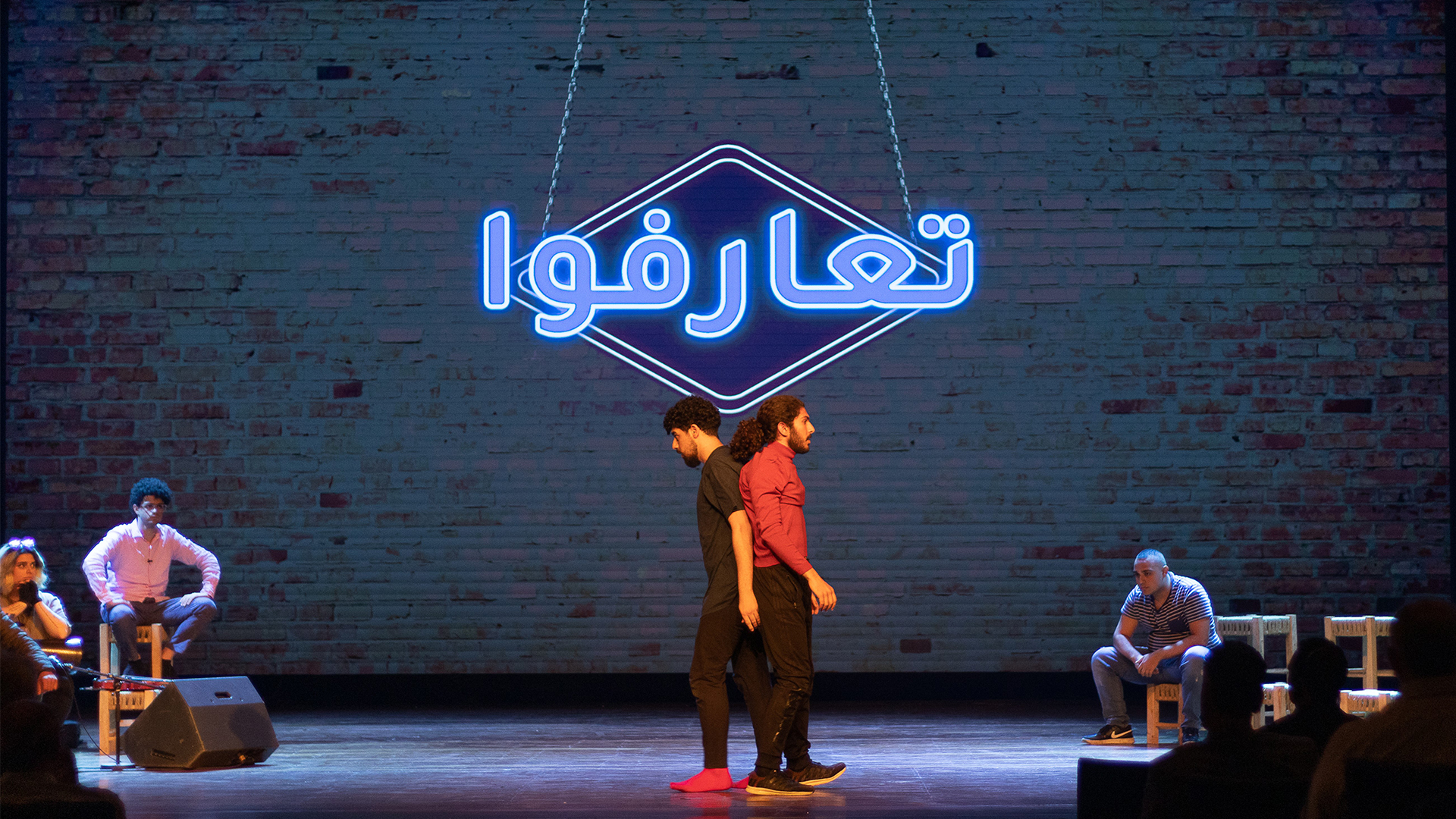
تعارفوا عمل مسرحي انطلق به مهرجان إهدنيات الدولي كرسالة دعم للمسرح اللبناني من منطلقات ابداعية وانسانية ومن صون حق الاختلاف. والمسرحية مشروع لجمعية مارش “March” من كتابة وإخراج يحيى جابر وهو من رواد المسرح اللبناني.تعارفوا “كوميديا طائفية” تعالج قضايا اللبنانيين الذين لم يتعارفوا على بعضهم البعض بالحقيقة وبالعمق وتستخدم المسرح وسيلة لقبول الآخر وتحرره من الطائفية والعنصرية على اساس الانسانية. كما تجسد هذه المسرحية واقع ١٨ شابا وشابة من مناطق وخلفيات عدّة في بيروت وضواحيها، يلتقون في برنامج تلفزيوني بفقرات ترفيهية مختلفة. يتقدّم الواحد تلو الآخر، ويعبّر عن نفسه ومعاناته وكأنه يروي شهادة حياة إما بقالب كوميدي أو بالغناء والرقص التعبيري والهيب هوب والبريك دانس. سبعون دقيقة من الضحك والدمعوالحقيقة الموجعة، قدمها الممثلون الهواة باحترافية، طرحوا خلالها أبرز القضايا اللبنانية المثيرة للجدل، من الطائفية والمثلية الجنسية، إلى العنصرية والعنف والذكورية كما التنمر، التمييز، العزلة كما الخوف من الآخر. أسئلة مختلفة يطرحها مقدم البرنامج “باتريك”، على المشاركين: “من انا؟” و”ماذا تعرف عن الآخر؟”. ثم، في الفقرة الأخيرة، يقسمهم إلى فرق بحسب الدين والمنطقة والجنسية وحتى الجندر. الشخصيات كلها قُدّمت مشبعة بالمعايير الاجتماعية المُسقطة، خصوصاً على جيل الشباب. أسئلة جعلتنا المسرحية ايضاً نطرحها على أنفسنا أثناء العرض، من نحن؟ وماذا نعرف عن أنفسنا قبل أن نعرف عن الآخرين؟ في نهاية المسرحية، حزب واحد يفوز وهو حزب الانسانية”. حضر الحفل زهاء ٣٠٠ شخص من مختلف المناطق اللبنانية كما تعارفوا قبلالعرض المسرحي ليتحول مسرح إهدنيات الى ساحة تعارف وسط اجواءٍ من الايجابية والفرح. وعبّرت مؤسسة مهرجان إهدنيات الدولي السيدة ريما فرنجيه عن سرورها لاستضافةهذا العمل المسرحي الفني الاجتماعي وبالتعاون الثاني الذي يجمع جمعية الميدانبمارش وأكّدت: “انطلاقًا من مسؤولياتنا و واجباتنا كما كنا على مر السنين و سنبقى داعمين للفن، الثقافة، و المسرح اللبناني.” كما أضافت: “اليوم أكثر من أي وقت بحاجة للفتة خاصة للشباب اللبناني، ولمبادراتهم التي تعبر عن همومهم،اهتماماتهم، تطلعاتهم كما طموحاتهم. وختمت فرنجيه: “كلبنانيين من كل المناطقنحن بحاجة اكثر من أي وقت مضى ان نتعارف بشكل أعمق ونتحاور لنتقارب ونخلق جواً من الوحدة في ظل هذه الظروف الصعبة.” وفي كلمةٍ لمؤسسة جمعية مارش ليا بارودي، “اكدت ان تعارفوا هي دعوة للتعارفبين سكان هذا البلد بغض النظر من هم ومن اي منطقة، كي نعترف ان اختلافاتناهي مصدر غنى وليست مصدر خلاف.” واثنت على ان لكلٍّ منا دوراً ومسؤولية لبناء جسور والعمل على الارض تحديداً مع الشباب من اجل تأمين الفرص التي يستحقونها.” كما شكرت الكاتب والمخرج يحيى جابر على ابداعه كما شغفه وإصغائه لقصص الشباب فشكلوا فريق عمل ناجح. وتقدّمت بالشكر لمؤسسة جمعية الميدان السيدة ريما فرنجيه على هذه الفرصة التي سمحت لهم بعرض هذه المسرحية خارج بيروت لتكون المرة الاولى في إهدن والتي اثنت على جمال طبيعتها وتاريخها المليء بالثقافة والفن. قُدمت المسرحية بأسلوب سلس، تفاعل معه الجمهور ضحكا ودمعا وتصفيقاً وهذا مابدا أن يحيى جابر سعى إليه في نَصّه، حين قدم كل عناصر الساحة اللبنانية في “تعارفوا” على أمل أن يتعارفوا
“Taarafou” Theater for Reconciliation /تعارفوا
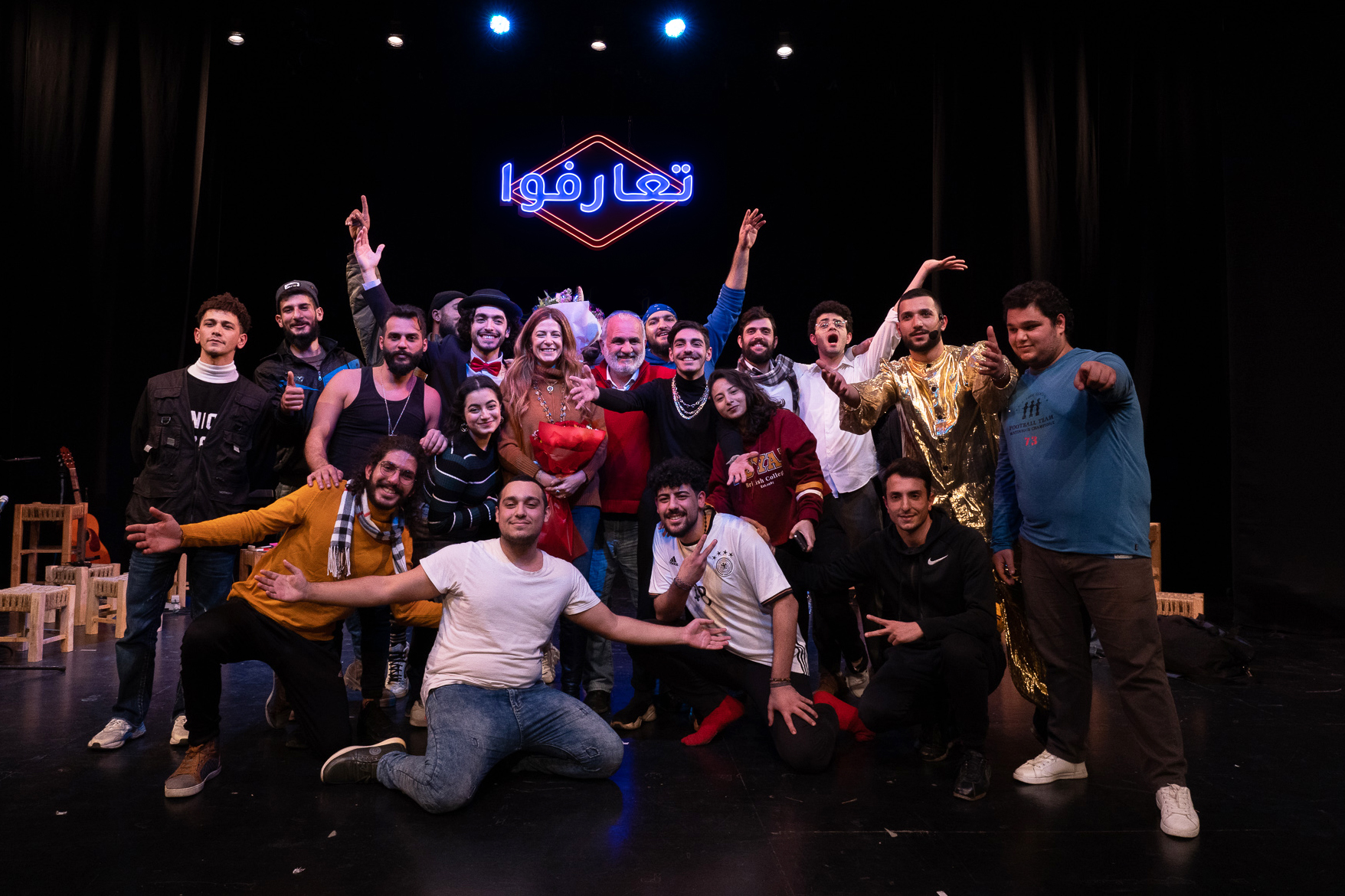
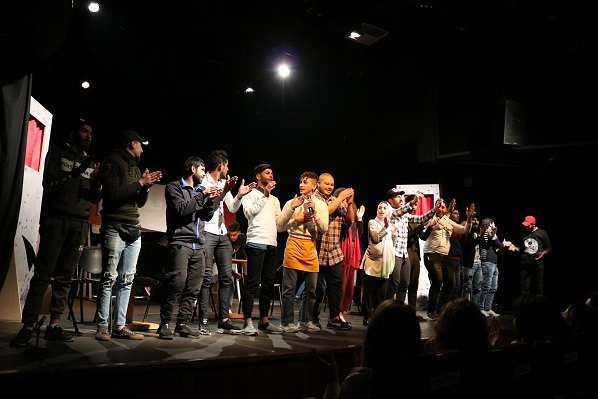
32 full house performances in Lebanon so far in four different theatres Viewed by more than 5576 people Covered by 29 national and international media MARCH Presents “Taarafou” Written and Directed by Yehia Jaber What happens when 18 young men and women, who come from different backgrounds and areas in Beirut, meet to get to know one another and act on stage for the first time? In October 2021, MARCH launched the 5th edition of its “Theater for Reconciliation” program. With increasing polarization and growing friction, MARCH saw the need to address in a theater format the underlying issues plaguing our Lebanon today, mainly: the fear and lack of trust in one another and the exclusion and marginalization of large segments of the population. Therefore, it decided with the collaboration of Yehia Jaber, to bring together youth from different backgrounds and areas in Beirut and its suburbs (Chiyah, Burj Al Barajneh, Ouzai, Dahyeh, Tayyouneh, Tariq El-Jdideh, Khandaq El Ghamiq, Naameh, Basta Al-Tahta, Verdun, Deir Qobel, Ras Al-Nabeh) for Taarafou: a theater play inspired by their lives and written and directed by Yehia Jaber, in an effort to defuse tensions and cultivate a sense of acceptance amongst youth in the capital. A script tackling important topics related to identity and diversity and inspired by the amateur actors’ lives: The play’s script was conceived using a unique creative process and was inspired by the lives, stories and experiences of 18 young women and men. The 70 min set is charged with interesting confrontation, humor, funny encounters, tension and more as the youth tackle a lot of controversial issues in today’s Lebanon, namely: the fear of the other, misconceptions, bullying, alienation and violence. The casting process was the result of March’s presence and reach on the ground through its community hub and cultural space, Hona Beirut (located at the intersection of Tayouneh, Ghobayri and Tarik El Jdideh) that engages and unites marginalized youth from different areas of Beirut through different activities and workshops. The casting took place at Hona Beirut where over 70 young men and women applied. Once selected, the cast undertook intensive rehearsals that spanned over a period of one month, under the supervision of Yehia Jaber and March, and during which the actors explored the different aspects relating to their understanding of their own individual identities. Essentially, Ta3arafou’s purpose is to answer crucial identity questions such as: “Who am I?” “What makes me who I am?”, “What do you really know about the other? “How are we different?”, but perhaps, the most important question the play tackles, is: “How are we similar?”. Although the selected youth had never undergone professional acting training, they were nonetheless able to bloom into powerful performers, performers of their own lives and truth, take the stage by storm and collectively transform their pain and sorrow into a wonderful show. Theater for reconciliation: “Theatre for reconciliation “is one of the various successful conflict resolution tools that MARCH implemented across the years. It was originally implemented in Tripoli in 2015 with Love and War on the Rooftop (that grouped former fighters from Beb el tebbeneh and Jabal Mohsen) followed by Tripoliyat,Habib El Kel in Akkar as well as Hona Beirut and Café Bi Kaffak in the capital. This innovative peacebuilding and rehabilitation tool, provides a platform for constructive dialogue and self-expression. Through the safe and inclusive space it creates, it allows participants to process any political, religious or personal grievances they may have and better understand “the other” away from divisive, prejudiced and stereotyped narratives.
ليبانون تابلويد – يحيى جابر في “تعارفوا”: لعبة البكاء والضحك في المأساة
تُعرض على خشبة مسرح دوار الشمس في الطيونة مسرحية “تعارفوا” كتابة وسيناريو واخراج يحيى جابر. الأربعاء ٠٢ فبراير ٢٠٢٢ أنطوان سلامه- تعارفوا عنوان مسرحية يحيى جابر “الكوميدية الطائفية” كتابة وإخراجا في سياق نشاطات جمعية مارتش يقودك العنوان حكما الى سورة الحجرات (آية ١٣) :” يا أيها الناس إنّا خلقناكم من ذكر وأنثى وجعلناكم شعوبا وقبائل لتعارفوا…” يقارب يحيى جابر عنوان مسرحيته من زاوية أخرى في سياق بحثه الدائم في الهويات اللبنانية. .”يمسرح” بحثه على خشبة من دون ديكور تغيب المدينة عن خشبته، باستثناء عازفين يجلسون على كراسي بمستويات عدة، وشاب يقدّم برنامجا تلفزيونيا لهواة في فنون عدة أو أوجاع مختلفة. .تغيب المدينة حجرا لتحضر بيروت في تناقضاتها، في الضاحية والخندق العميق والطريق الجديدة والاشرفية يظهر على الخشبة، هواة في التمثيل، حصدتهم جمعية مارتش، من بيئات مهمّشة، لتكسر حواجز الخوف من الآخر فتفتح لهم المستقبل. لا يضيئ يحيى جابر على الهوية الضائعة والمشلّعة في حدّ ذاتها، يقود ممثليه الى داخلهم، يفصلهم عن الإطار ويتوغل معهم في الذات والآخر، في برنامج احتفاليّ، يستند الى التعبير عن الجراح التي فيهم. يقارب يحيى الصراعات اللبنانية ويغوص أكثر في تداعيات الفقر والنمو العائلي والصدمة في مدرسة أو شارع. تكمن مهارته في حواره مع هؤلاء الشباب المهمّشين، لينتزع منهم اعترافات خاصة حوّلها الى حبكة مسرحية جذابة. كتب نصّه انطلاقا من تجارب شبابية، فجاء حقيقيا الى درجة يختلط فيها المسرح مع “حيوات” حصلت بالفعل. من تابع مسرح يحيى جابر، يلاحظ أنّ في نصه والسيناريو الذي صاغه في “تعارفوا” يخرج عن سياقه من دون أن يبتعد. حافظ على اتقانه فنّ السخرية في اللحظة الجديّة. تتمثّل شاعريته في التعبيرعن وجع ممثليه، لم يكتب نصا شعريا، غاص في بلورة نص دراماتيكي مأهول بسكان من لحم ودم وجراح. برع في استخدام ” المونولوج” المشهور في صياغته، فأعطاه بُعدا جديدا تمثّل في الحديث علنا مع الذات ومع الآخر المُختلف في جلسة عامة أو برنامج تلفزيوني. حافظ أكثر على صفته صحافيا استقصائيا يبحث دوما عن الفضيحة التي تكشفها صراعات الهويات الضائعة في الهوية الشخصية واللبنانية، وهذا امتياز له في مسرحه ال “بيروتي” المتفرّد بصفة عالمية، في تطرقه الى الهواجس. بيروت في “تعارفوا” هي الأساس بما تضمه من هويات وجنسيات ضائعة في مآسي لبنان وفلسطين وسوريا. ما أضافه يحيى جابر في مسرحيته الجديدة، أنّه اقتبس حواراته من نماذج بشرية حيّة نراها تعرض مآسيها على الخشبة. أخرج المأساة الفردية من دهاليزها، ومن تهميشها، لتتدفق على الخشبة حركة وتعبيرا ،فيضحك الجمهور لينكفئ الى ذاته بعد كل قهقهة، يتذكّر أنّ ما يشاهده ويتفاعل معه، ليس مسرحا، هو الواقع الملتصق بالحقيقة المؤلمة. نجح يحيى جابر في فصل المسرح عن الحياة، دمجهما في “تعارفوا” الى حدّ التلاحم المتماسك. لم يصدّق الجمهور أنّ من على الخشبة هو ممثل، أقنعه يحيى جابر بأنّه انسان مجروح ومصلوب ومفتت، ومطعون في صميمه. كسر محرّمات وهو الذي يجيد الهزل في الجدّ. حطّم الوقار والرصانة في لعبته المسرحية التي تغطي انحرافه في السخرية السوداء بالتساوي، عرض على المسرح أوجاع الرجل والمرأة والمثلية اختارغناء الراب “المرذول شرقا” لتصدح أصوات غنيّة وفتيّة أبرز مهارات الشباب في الرقص الملتوي، حين نشر سود أميركا كمنبوذين، هذا النوع من الرقص المجنون للتعبير الجسدي عن ذواتهم في الشارع المفت شخصيات الطريق الجديدة والضاحية والخندق العميق طغت أبرز من خارج المألوف صورة الدرزي الذي لا مكان له في الطوائف، خندقه في أقلوية دمجها في نهاية المسرحية مع أقلية مسيحية في رمزية الانعزال في مقابل الأكثرية ولحظة تطرق الى عنصرية “البشرة الغامقة” ارتفعت مسرحيته الى مستويات الجرأة الجارحة جدا مقدّما لوحة رائعة من التنمّر الذي يشكل محورا ثابتا وخفيّا في النص الذي كتبه لم يتردّد يحيى جابر، في إخراجه وادارته الممثلين، في المحافظة على شخصية كل شاب وافق على التمثيل حتى ولو لم يكن موهوبا لم يهتم بالموهبة بل بقدرة هذا الشاب على أن يتخطى ذاته على الخشبة عارضا جراحه أمام جمهور ضحك كثيرا وبكى ربما بكى من كثرة الضحك وربما ما عرضه يحيى جابر تعاونا مع ليا بارودي (منسّقة عامة لجمعية مارتش)يُبكي كثيرا *جاء في كراسة المسرحية:ماذا يحدث عندما ١٨ شابا وشابة، من مناطق وخلفيات مختلفة في بيروت وضواحيها يلتقون ليتعارفوا ويمثلوا لأول مرة على خشبة المسرح؟ استخدمت عملية فنية فريدة من نوعها في كتابة سيناريو المسرحية، وقد استوحيت من حياة وقصص وتجارب ١٨ شابا وشابة ٦٠ دقيقة مليئة بالمواجهات الشيقة وحس الفكاهة والمواقف المضحكة والتوتر، والمزيد حيث يعالج الشباب مواضيع مهمة،من أنا؟ شو بتعرف عن الآخر، وكم هوية بالهوية اللبنانية؟ ويجيبون عن القضايا المثيرة للجدل في لبنان اليوم ألا وهي: الخوف من الآخر والمفاهيم الخاطئة والتنمّر والعزلة والعنف
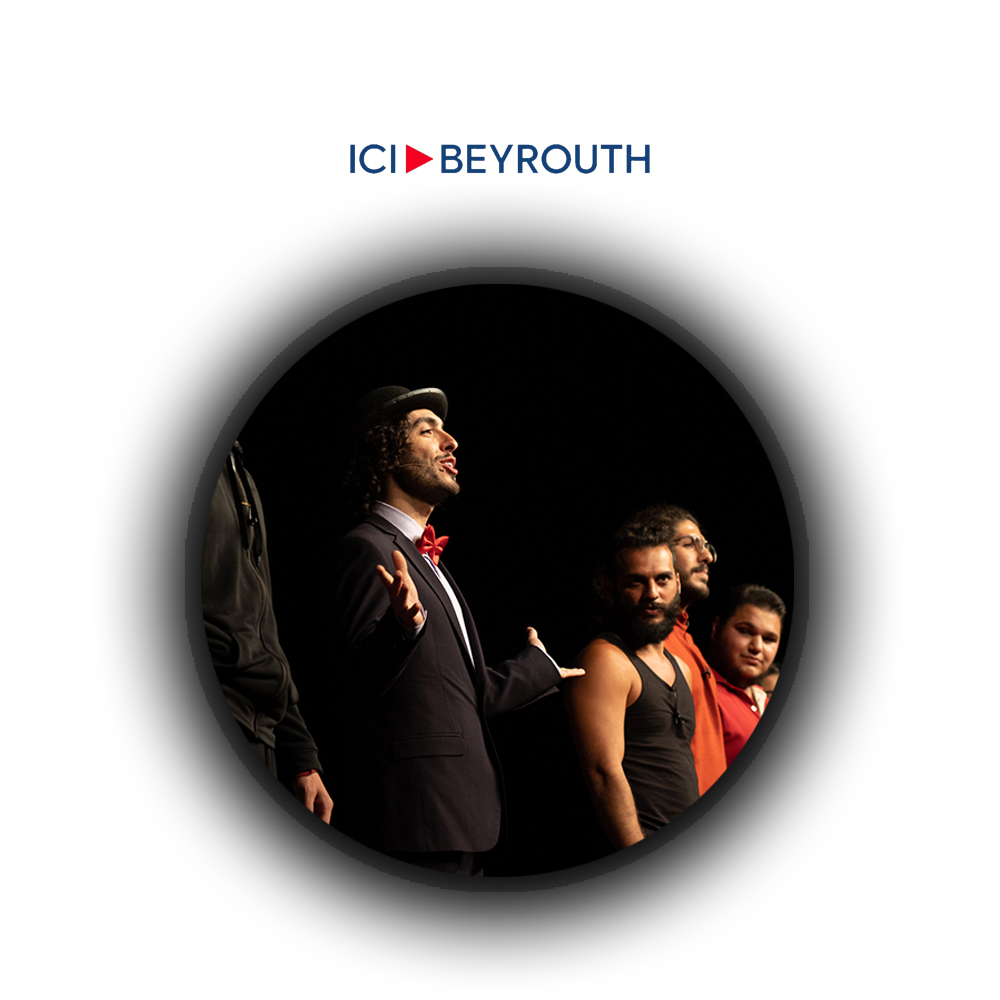
Ici Beyrouth – Initiée par MARCH, “Taarafou”, les 1er et 2 février au théâtre Tournesol
Bélinda Ibrahim Jan 27, 2022 À 5:50 Les initiatives culturelles de l’ONG MARCH, fondée par l’infatigable Léa Baroudi, se suivent, se ressemblent, mais surtout rassemblent. Cette dernière pièce dont le scénario a été écrit par Yehya Jaber se tiendra, pour deux soirées consécutives, au théâtre Tournesol. À l’image des pièces précédentes, celle-ci sera également jouée par des acteurs amateurs. Pourquoi ? Parce que Léa Baroudi est à sa sixième expérience en la matière, ” Le théâtre pour la réconciliation ” ayant porté ses fruits. Après avoir réconcilié les jeunes gens rivaux de Beb el Tebbené et de Jabal Mohsen à Tripoli sur les planches, elle poursuit sa mission, à savoir casser le mur de la peur de l’Autre différent de soi. Elle est profondément convaincue que l’Art (sous toutes ses formes) est un moyen de faire passer des messages de paix et permet de percevoir et d’accepter l’autre sans préjugés. L’accès à ces deux soirées est gratuit. Les spectateurs sont invités, pour ceux qui le souhaitent, à déposer la somme qui leur convient dans une caisse prévue à cet effet à la sortie du spectacle. La somme récoltée ira dans son intégralité aux acteurs. Les places étant limitées, il n’en reste pas moins qu’il faut se dépêcher de réserver des sièges en appelant le 01208101. Ou en envoyant un mail à [email protected]. La pièce commence à 19h précises.
‘TAARAFOU’, LE THÉÂTRE POUR LA RÉCONCILIATION Scènes
27/01/2022|Léa Samara MARCH, une ONG libanaise qui œuvre pour le renforcement de la cohésion sociale au sein de certaines des zones de tensions au Liban a lancé en octobre 2021 la 5e édition de son programme « Théâtre pour la réconciliation ». Face à la polarisation et aux frictions croissantes, l’association a vu la nécessité de rassembler des jeunes de différents milieux et quartiers de Beyrouth et de ses banlieues. A l’occasion de la représentation de la pièce « Taarafou » au théâtre Tournesol à Beyrouth début février, Léa Baroudi a répondu à nos questions. En quoi consiste l’initiative « Taarafou » ? « Taarafou » est une pièce de théâtre écrite et dirigée par Yehia Jaber, dans le but de désamorcer les tensions et de cultiver un sentiment d’acceptation parmi les participants. Conçu à l’aide d’un processus créatif unique, le scénario a été inspiré par les vies, les histoires et les expériences de 18 jeunes femmes et hommes. Ainsi, la pièce aborde des sujets importants, notamment liés à la recherche d’identité et à la diversité. Le résultat : 60 minutes de confrontations intéressantes, d’humour, de dialogues pertinents, de rencontres amusantes, de tension. En outre, les jeunes abordent un grand nombre de questions controversées dans le Liban d’aujourd’hui, à savoir la peur de l’autre, les préjugés, l’intimidation, l’aliénation et la violence. Comment se sont déroulées l’élaboration et la mise en place de la pièce ? La distribution a entrepris des répétitions intensives qui se sont étalées sur une période d’un mois, au cours de laquelle les acteurs ont pu explorer différentes thématiques intimement liées à leur compréhension de leur propre identité individuelle. Essentiellement, l’objectif de « Taarafou » est de répondre à des problématiques identitaires cruciales telles que : “Qui suis-je ?” “Qu’est-ce qui fait ce que je suis ?”, “Que sais-je vraiment de l’autre ? “En quoi sommes-nous différents ?”. Néanmoins, la question la plus importante que la pièce aborde est justement : “En quoi sommes-nous semblables ?”. Bien que les jeunes sélectionnés n’aient jamais suivi de formation professionnelle d’acteur, ils ont néanmoins été capables – avec le soutien de Yehia Jaber – de s’épanouir en devenant de puissants interprètes, de prendre la scène d’assaut et de transformer collectivement leur douleur et leur chagrin en un merveilleux spectacle. Comment cette initiative s’inscrit-elle dans la ligne d’action générale de MARCH ? La mission de MARCH est centrée sur une approche innovante et multidisciplinaire de la consolidation de la paix et de la résolution des conflits, qui se concentre sur l’engagement des jeunes vulnérables et socio économiquement marginalisés. Le “théâtre pour la réconciliation” est l’un des divers outils de résolution de conflit réussis que MARCH a mis en œuvre au fil des ans. Il a été initialement mis en œuvre à Tripoli en 2015 avec Love and War on the Rooftop, suivi par Tripoliyat, Habib El Kel au Akkar ainsi que Hona Beirut et Café Bi Kaffak dans la capitale. Cet outil innovant de consolidation de la paix et de réhabilitation offre une plateforme pour l’expression de soi et un dialogue constructif. Grâce à l’espace sûr et inclusif qu’il crée, il permet aux participants de traiter tous les griefs politiques, religieux ou personnels qu’ils peuvent avoir et de mieux comprendre “l’autre” loin des récits divisés et stéréotypés. L’objectif de cette initiative est donc de réintroduire cet “autre” à travers un prisme plus positif, et ainsi de renforcer la résilience des jeunes hommes et femmes en leur donnant les moyens de devenir des agents du changement.
« Taarafou » de Yehya Jaber : quand 18 jeunes Libanais redécouvrent sur scène ce qui les lie
À l’affiche du théâtre Tournesol ce soir et demain soir, une « comédie qui démine les tensions communautaires » produite par l’ONG March et interprétée par des jeunes issus de divers quartiers antagonistes de la capitale, qui racontent leurs propres vécus. « L’OLJ » les a rencontrés. OLJ / Zéna ZALZAL , le 01 février 2022 à 00h00 « Chez nous, on nous disait : méfie-toi du druze, il est très nerveux et éloigne-toi du chrétien, c’est un buveur d’alcool. Cette expérience scénique m’a fait réaliser à quel point tout cela est cliché. Aujourd’hui, j’ai de nouveaux amis qui ne sont pas de ma confession et avec qui je m’entends parfaitement », confie Mohammad, un sunnite de 21 ans originaire de Tarik el-Jdidé. Idem pour Élias, 23 ans. « Je suis le seul chrétien de la bande. Et je m’y sens aussi à l’aise qu’un poisson dans l’eau », claironne ce frais diplômé de l’Université libanaise en gestion et conservation des ressources naturelles, qui a grandi à Naameh dans « un environnement où chrétiens et musulmans ne frayaient pas ensemble ». Ils se prénomment Dana, Taline, Sahar, Bilal, Élias-Patrick, Ibrahim, Hamzah, Omar, Ahmad, Mohammad… Ils ont tous entre 18 et 28 ans. Ils viennent de Tarik el-Jdidé, Bourj el-Brajné, Khandak el-Ghamik, Basta al-Tahta, Chiyah, Tayouné, Ras el-Nabeh ou même de Naameh… Ils ont tous plus ou moins la même dégaine, la même « coolitude » en jeans-survêtements-baskets. Et ils répètent dans une ambiance tout à fait amicale Taarafou (Faites connaissance) de Yehya Jaber, à l’affiche du théâtre Tournesol aujourd’hui mardi 1er et demain mercredi 2 février. Une « comédie communautaire » bâtie autour de leurs affiliations identitaires (souvent) opposées et de leurs confessions (parfois très) intimes…Que se passe-t-il quand 18 jeunes gens et jeunes filles issus de divers quartiers de Beyrouth et sa banlieue, élevés dans le sectarisme, la peur et le rejet de l’autre, se retrouvent pour la première fois sur scène pour interpréter une pièce directement inspirée de leurs propres vécus ? Et bien cela donne un (tout) petit espace de réconciliation nationale. Comme un échantillon de ce que pourrait être le pays du Cèdre, une fois débarrassé de ceux qui y attisent les haines communautaires et dégradent toute tentative de vivre-ensemble. Cet espace commun, l’association March, menée par Léa Baroudi, tente de le construire depuis 2011 à travers diverses actions culturelles, visant à abattre les clivages et à rétablir le lien national. L’ONG qui a réussi notamment à rapprocher, par le biais du théâtre et de l’insertion professionnelle, des ex-jeunes combattants de Bab el-Tebbaneh et Jabal Mohsen, les traditionnels quartiers ennemis de Tripoli, poursuit sa mission partout où les antagonismes se font plus prégnants. L’après-Tayouné C’est ainsi qu’aux lendemains des incidents de Tayouné, March décide de redonner un coup de collier à son programme de renforcement de la cohésion sociale en produisant une nouvelle pièce qui réunirait sur les planches des jeunes en provenance de secteurs en confrontation de la capitale. À cet effet, la directrice de l’ONG fait à nouveau appel à Yehya Jaber, qui avait signé Houna Beyrouth, une précédente pièce dans le même registre. Le fameux dramaturge, auteur et journaliste, qui a beaucoup abordé dans son répertoire les tensions des quartiers et des communautés beyrouthines, est la personne la mieux qualifiée pour rassembler dans un théâtre de réconciliation des jeunes gens et jeunes femmes issus d’environnements opposés. Passé maître dans le déminage sur scène des conflits communautaires, l’homme à l’allure débonnaire sait écouter et guider avec une bienveillance toute paternelle ses 18 jeunes comédiens non professionnels sélectionnés sur la soixantaine de candidats au casting de Taarafou. Lire aussiYehia Jaber, comme une boîte de chocolats ouverte « L’objectif principal de ce travail théâtral étant le retissage d’un lien national commun, il fallait avant tout déconstruire les a priori en privilégiant une approche psychologique d’ouverture aux autres. Et pour mieux connaître l’autre, il faut d’abord se connaître soi-même. Qui suis-je ? Qu’est-ce qui a fait que je sois devenu tel que je suis ? Que sais-je réellement sur l’autre ? En quoi sommes-nous différents les uns des autres ? Et surtout qu’est-ce qui nous rapproche ? J’ai amené mes comédiens à se poser ces questions. Et à partir de leurs réponses, franches et sincères, j’ai tissé le canevas de cette pièce de 60 minutes, où chacun raconte sa propre histoire, son vrai vécu », indique le metteur en scène. Confessions, acceptation et catharsis Taarafou sera ainsi le mot d’ordre de Jaber au cours des six semaines de répétitions quasi quotidiennes qui se déroulent au centre culturel Hona Beirut-Café B Kaffak de l’association March à Beyrouth (à l’intersection Ghobeiry et Chiyah). Et le leitmotiv qui transformera cette première expérience des planches en une véritable catharsis pour ces 18 jeunes. Dès lors, Dana, 22 ans, « future chanteuse, chiite et communiste », confiera sans ambages son attirance pour « les chrétiens, leurs fêtes et leurs traditions ». Hamza, étudiant en journalisme de 19 ans, habitant de Ras el-Nabeh, laissera filtrer entre les lignes son orientation sexuelle tue jusque-là. Tandis que Bilal, 25 ans, chiite de Bourj el-Brajneh, ex-joueur de football au sein du club Nejmeh, reconverti en entraîneur pour cause de problème aux genoux, parlera pour sa part de son rêve de carrière avorté. Il évoquera aussi ses deux ans de scolarité invivables aux Makassed et sa meilleure intégration au sein de l’école publique de Karm el-Zeitoun. Et Omar Haidar, 19 ans, qui porte « un prénom sunnite et un nom de famille chiite », dira que sa double affiliation est une grâce. « Je décline soit mon nom, soit mon prénom en fonction du quartier ou de la région où je me trouve », confie, le regard malicieux, celui qui vient de s’enrôler dans la Défense civile…Rapprocher et unir à travers une culture commune une génération éclatée autant par les crises que par les discours des dirigeants. C’est aussi cela la fonction du théâtre. Et c’est ce qui en fait un lieu où le lien social se noue spontanément entre des jeunes qui partagent tous le même rêve d’une vie décente, d’un avenir assuré, de tolérance et d’acceptation de l’autre, quelles que soient
Home Magazine – Peace Takes Center Stage with Lea Baroudi
By Maryam Ghaddar; Interviewed by Editor-in-Chief, Patricia Bitar Cherfan Disadvantaged, marginalized, impoverished. How does one begin to help people chained to this end of the societal spectrum? MARCH Lebanon is a local non-profit NGO whose mission is to promote social cohesion and personal freedoms through arts and culture. Lights MARCH was created in 2011 by a group of people who, simply put, wanted to make a difference. Their first initiatives were largely focused on freedom of expression and anti-censorship, though it eventually morphed into efforts to fight poverty and injustice in the country. In 2015, MARCH took on new challenges and adventures that embrace a diverse set of tools to encourage constructive dialogue and personal development. Peace building and conflict resolution became pillars of MARCH’s work, which continues to evolve and expand its scope of work. Co-founder and director Lea Baroudi sat down with HOME Magazine to discuss the foundation of MARCH Lebanon as a pedestal for listening and accepting each other’s differences without aiming to silence others in favor of one’s personal convictions. “We believe arts and culture are tools to bring people together and should not be censored,” she explains. “You can actually, on the contrary, talk about the past and do cathartic processes without having judgment or tensions.” Baroudi’s eventual work in the field of social activism trying to effectively mend sectarian gaps was an unexpected twist of fate. “I lived in an apolitical household where we didn’t even differentiate in terms of religion,” says Baroudi. “I began having culture shocks, starting in university when I heard people Sunni/Shia differences, so when we started working on freedom of expression and focusing on youth, I realized how much there were grudges and tensions. People were hiding behind the idea that Lebanon is seen as a beacon for coexistence and acceptance, which effectively, is not really the case.” With that, Baroudi decided to earn a diploma in mediation at Université Saint-Joseph de Beyrouth at the Professional Centre of Mediation in Lebanon, which was set up in 2011. In 2013, after realizing the extent of deep-set tensions and grudges between the sects, particularly in the polarized Sunni-majority Bab el- Tabbaneh and the Alawite Jabal Mohsen neighborhoods of Tripoli, an idea began to formulate around the youth in that area. There’s a certain irony in this, as Baroudi grew up in Ras Beirut and had no prior background with Tripoli. She began considering the possibilities of using theater as a tool to “reconcile people who were at odds with each other.” “Back then, all you would hear about Tripoli in the media was: clashes, deaths, and terrorism. I was fascinated by the fact that all of this violence was happening in two neighborhoods separated by just one street. I thought that this would be the best place to try this project,” says Baroudi. “She faced constant pessimism, fear-mongering, and comments like “You’re just a woman. Even a man can’t do that job.” She was advised on numerous occasions against pursuing this endeavor. She faced constant pessimism, fear-mongering, and comments like “You’re just a woman. Even a man can’t do that job.” Rather than slay her confidence, these words acted as a catalyst for her. Camera MARCH’s first project was a play called Love and War on the Rooftop – A Tripolitan Play, written and directed by Lebanese director Lucien Bourjeily. Auditions were held, with 16 youth initially chosen — eight from Jabal Mohsen and eight from Bab el- Tabbaneh. After several long months of rehearsing on a purely voluntary basis, the play premiered to a standing ovation. “The idea was simple,” Baroudi tells us. “To have young men and women from both sides of the frontlines participate in a comedy play inspired by their lives. The more difficult process was to get them to attend the rehearsals. When they did come, they used to come armed. I still remember the very surreal experience of having a garbage bag at the entrance to throw in found razor blades and knives and guns. The mood was very tense,” says Baroudi. Although she received threats and endured attempts at sabotage, she admits the positive outcomes far outweigh the hurdles it took to get there. From drug addict to administrator, gun-wielder to computer whiz, fighter to advocate against sectarianism, high school dropout to leader of reconciliation, these real-life transformations among participants is what came of Baroudi’s determination. “With some youth you don’t succeed and others you do. You always feel like you want to stop, but you keep going. At many times, was it hard? Extremely … But when I see these changes in people’s lives and I say what if I had listened at the beginning or what if I had stopped at this point, I wouldn’t see that change. Each one has a part to play,” says Baroudi. Baroudi’s strength of heart comes from the people and youth with whom she’s worked, but also from the satisfaction that comes with seeing them happy and positively involved with their communities. “We all think our problems and feelings are the end of the world, but the more you learn of these ordeals, the more you live with your own,” she says. “Although their view of women is very conservative, they don’t mind women holding positions of authority because it doesn’t shatter their egos.” Baroudi, who was awarded a British Order of Chivalry by the Queen of England in 2018 for her work with marginalized communities, laid out MARCH’s key objectives. It aims to educate, motivate, and empower youth, to instill genuine respect and acceptance in the Lebanese social structure, and to strive for women’s rights and gender equality. At this last point, she offered some interesting insight into the psychology and the game-changing dynamic of how being a woman played to her advantage in her efforts to help Tripoli’s youth. “I think that being a woman made it so much easier. In this very patriarchal environment, because women are not perceived as rivals, they show their weaknesses more easily, and are therefore… more a source of
CAFE BI KAFFAK
A cultural journey from Tripoli to Beirut Throughout the years, MARCH has actively incorporated the arts into its initiatives. This stems from the organization’s belief in the transformative and often cathartic power of self-expression. Our most recent adventure was no exception! Our work with youth from marginalized neighborhoods in Beirut has Tripoli has shown us that these communities are full of unbelievable talent and untapped potential. It proved that with support, a platform and the right opportunities, these young men and women could turn their lives around. Therefore, we decided to put together an evening filled with dynamic performances that would take us on a cultural journey through time and bring together youths from Beb El Tabbaneh, Jabal Mohsen, Khadaq Al Ghamiq, Tarik Al Jadida, Chiah and Madina Al Riyadia on one stage. Together they worked hand in hand to create sketches, songs and videos inspired by their own stories with the support of the one and only George Khabbaz and the direction and guidance of Romeo El Hashem. These pieces reflected their daily realities in the most unique ways making for a roller-coaster of emotions as some brought laughter while others brought tears. We cannot wait to recreate this experience soon!